Live TV streamers leave viewers more satisfied than cable
Live TV streamers leave viewers more satisfied than cable
A new study from JD Power shows that viewers are staying with pay-TV plans despite the cost out of convenience.


Who does it better? Both cable companies and live TV streaming services offer top cable channels to viewers, and many times the only difference between the two is that live TV streaming delivers your channels through your own internet connection. A new J.D. Power survey on the satisfaction of customers who use both cable plans and live TV streaming services shows which type of service delivers channels more effectively, and why viewers stay with cable so stubbornly.
Key Details:
- Can you hear me now?: Verizon FIOS is the most-liked cable distributor on the market.
- YouTube TV on top: YouTube TV has the highest satisfaction score of any live TV streamer.
- Why stay?: Despite low satisfaction, cable customers often stay because they don’t have any other choice.
According to the J.D. Power 2025 Television Service Provider Satisfaction Study, Verizon FIOS is the most popular cable distributor on the market. It has a customer satisfaction score of just 577 out of 1,000. The segment average satisfaction score is a mere 531, and the lowest-scoring cable distributor of the bunch is Optimum, with a rating of just 465.
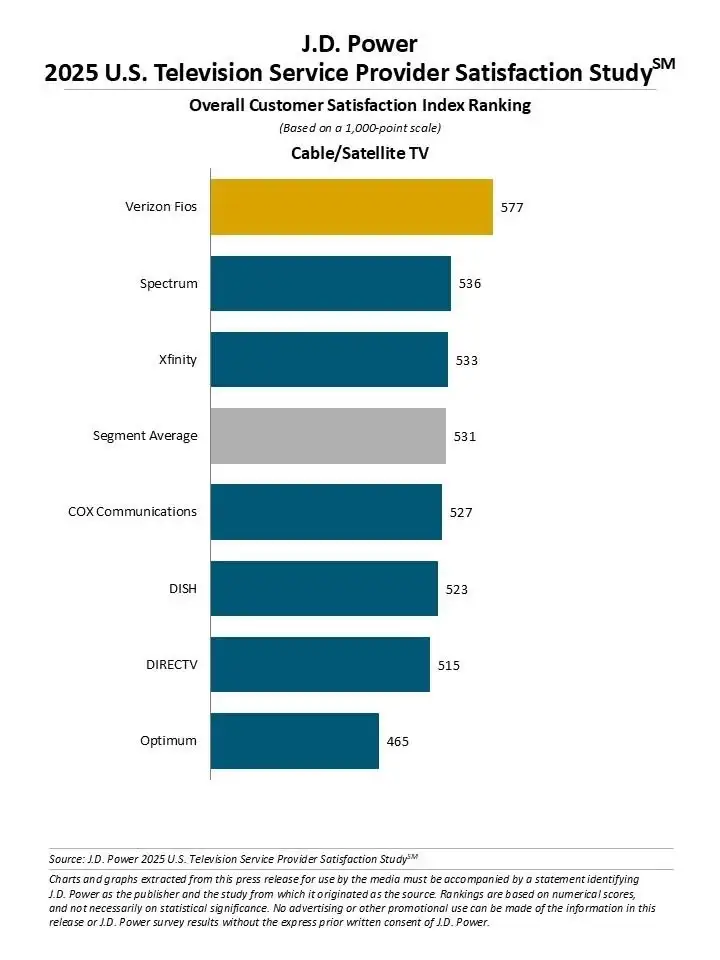
Click chart to expand.
The numbers overall indicate that people are generally not satisfied with their cable subscriptions. With costs rising out of control, bulky equipment, and prohibitive contracts that lock customers in for years on end, it’s hardly surprising that cable rates are so poorly perceived by audiences.
Live TV streaming does a bit better in terms of customer satisfaction. The segment average satisfaction score is nearly 100 points higher than it is for cable, and the leading live TV streamer YouTube TV has a score of 649. Every live TV streaming service has a higher customer satisfaction figure than the highest-scoring cabler.

Click chart to expand.
Cord-cutting has undoubtedly eaten into the customer pool for cable distributors over the past decade, but there are still enough people clinging to the industry to keep it afloat financially. The J.D. Power study suggests this isn’t because of any great love for their service, but rather because they don’t feel the freedom to leave.
High barriers such as long-term contracts with expensive cancellation fees, limited provider availability by location, and the sometimes Byzantine steps companies put viewers through to switch their service keep many viewers from canceling a cable plan they no longer like. The month-to-month contracts of live TV streaming are likely a big reason that customers are so much more satisfied with them.
“Cable TV providers have longer-standing customer relationships and more tenure than live TV streaming services,” J.D. Power executive Carl Lepper. “Many customers choose cable because of bundled TV and internet offerings, an option that streaming providers typically don’t offer. In areas with limited internet provider availability, bundling becomes even more common. While live streaming services may offer greater flexibility and higher satisfaction, they also face higher turnover.”

YouTube TV
YouTube TV is a live TV streaming service with more than 60 channels for $82.99/month. This plan includes local channels 32 of the top 35 cable channels, and regional sports networks (RSNs) in select markets. The base plan includes more than 100 live channels, including major broadcast networks like ABC, CBS, FOX, and NBC, as well as popular cable channels such as ESPN, CNN, FX, USA Network, and TNT. Local channels are included in most markets, making YouTube TV a full replacement for traditional cable for many viewers.