Parrot Mobile review: Affordable wireless service with some tradeoffs
Parrot Mobile review: Affordable wireless service with some tradeoffs
An amazing choice of plans that even data-hungry users will love.

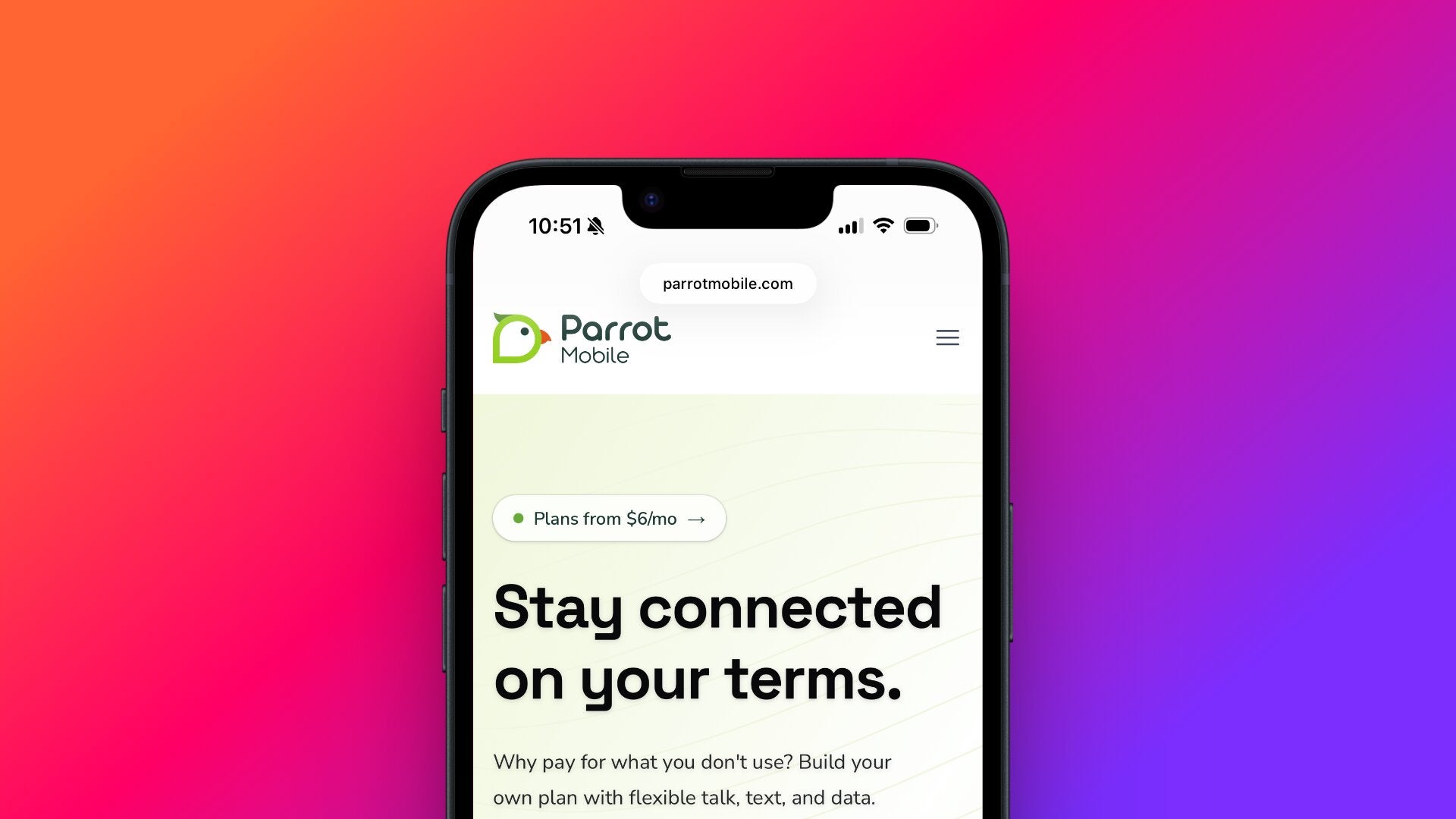
Wireless service has become wildly expensive over the past few years, especially if you’re on one of the major carriers with premium unlimited plans, add-ons, and device financing baked into your monthly bill. That’s what makes smaller prepaid carriers like Parrot Mobile intriguing. Instead of locking users into expensive plans or long-term commitments, lured by endless perks, Parrot Mobile focuses on flexibility, lower prices, and simple bring-your-own-phone service. What were once thought of as simply “cheap” carriers, MVNOs (mobile virtual network operators) like Parrot are now much more.
After spending time testing the service, Parrot Mobile feels like a carrier that gets a lot right for the money — but also one that cuts a few corners compared to premium providers. The pricing is genuinely attractive, the setup is straightforward, and the flexibility is refreshing, but reliability was inconsistent during testing, with spotty coverage and occasional network issues showing up often enough to notice.
For users who prioritize value over perfection, though, there’s still a lot to like here.
Parrot Mobile review
What is Parrot Mobile?
Parrot Mobile is a prepaid MVNO, or mobile virtual network operator, meaning it leases access from an existing nationwide wireless network rather than building and operating its own towers. The company markets itself as a low-cost, no-contract alternative to the “Big 3” carriers while still offering nationwide 5G and LTE coverage. Where most carriers come right out and say what networks they’re running on, Parrot is a bit more vague, simply noting it’s the same network “the big guys use.” Meaning it could be a mix of AT&T, T-Mobile, and Verizon, or any separation of the three. Like most MVNOs, performance can vary depending on congestion, location, and prioritization compared to premium postpaid customers.
Like many newer MVNOs, the focus here is simplicity. There are no stores, contracts, financing agreements, or long-term commitments. Instead, Parrot Mobile centers on online activation, flexible plans, eSIM support, and the ability for customers to bring their own devices. The service also includes features like hotspot access, international calling, and, on many plans, its “Polly” AI voicemail transcription.
Signing up and getting started
One of the better parts of the Parrot Mobile experience is how simple the signup process is. Everything is handled online, and the carrier walks users through plan selection, phone compatibility, activation, and number porting without requiring a store visit. The entire process feels designed for people who already know how prepaid carriers work and just want to get service running quickly. I was able to sign up and have everything done in about 20 minutes. If you’re unfamiliar with the process, it might take a bit longer, but in general, it is incredibly streamlined and intuitive.
Users can either choose a physical SIM card or activate through eSIM if their phone supports it (which most newer devices do). eSIM activation is definitely the easier route, since service can start almost immediately after checkout. During testing, the activation process on my iPhone 12 was fairly painless, though network registration took longer than expected and required restarting the device, which isn’t abnormal.
Porting an existing phone number is also supported, which makes switching from another carrier relatively straightforward. Parrot Mobile says most unlocked phones work with the service, though users are encouraged to check compatibility using their IMEI number before signing up. My unlocked iPhone had no issues getting up and running with the eSIM process.
Bring your own phone support
Parrot Mobile heavily pushes its bring-your-own-device approach, and realistically, that’s the best way to use the service. Instead of trying to sell expensive new phones, the carrier encourages customers to keep their current devices and simply transfer service. If you need a newish (gently used) device, I always head to Swappa for a good bargain.
Most modern unlocked iPhones and Android devices appear to work with Parrot, including newer 5G-capable models. iPhones from recent generations, Samsung Galaxy devices, Google Pixel phones, and many factory-unlocked Android phones should all be compatible as long as they support the correct LTE and 5G bands. Users can quickly verify compatibility by entering their IMEI number directly on Parrot Mobile’s website.
That said, like many smaller carriers, there can occasionally be hiccups with activation or compatibility depending on the phone model, eSIM support, or whether the device was previously tied to another carrier. While testing did not reveal any major incompatibility issues, setup occasionally felt less polished than what you’d get from a major carrier, though the process was much more efficient than visiting a carrier store or speaking to someone over the phone to get set up.
Plans and pricing
Pricing is where Parrot Mobile becomes genuinely compelling. I’ve seen a lot of MVNO plans over the years covering tech, but these are truly unique offerings.
The carrier offers extremely inexpensive plans compared to Verizon, AT&T, and T-Mobile, with options starting around $6 per month. Rather than forcing everyone into expensive unlimited plans, Parrot Mobile lets users customize their service based on how much talk, text, and data they actually use. Where someone who streams constantly might want a more expensive unlimited plan, others (like my parents) can get by just fine with the $10-per-month. 1-GB-Starter plan.
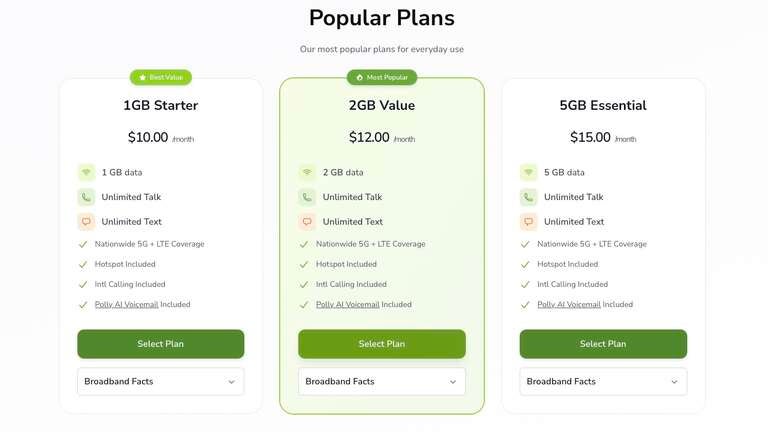
The company offers a surprisingly broad range of plans, including:
- Unlimited talk and text plans
- 100-minute talk plans
- 1GB starter plans
- 2GB and 5GB everyday plans
- 10GB premium-style plans
- Data-only options for tablets and hotspots
Most plans also include hotspot access, international calling, Wi-Fi calling, and Parrot’s Polly AI voicemail features at no additional charge.
Compared to the major carriers, the biggest difference is flexibility. Traditional carriers increasingly push expensive unlimited plans that bundle in streaming perks, device payments, and long-term incentives. Parrot Mobile takes the opposite approach by focusing on lower monthly costs and simpler service. For light users, secondary lines, kids, or older family members, the value proposition is excellent. Having a family of four on Verizon, for example, can easily run over $200 per month, but with Parrot, you can almost squeak by on that price for an entire year.
Coverage and network performance
Parrot Mobile advertises nationwide 5G and LTE coverage along with Wi-Fi calling support. In ideal conditions, service performance was sufficient for everyday tasks, including streaming music, watching videos, web browsing, GPS navigation, phone calls, and messaging.
However, during my testing, I used the service to stream live video of my kids’ sports (GameChanger parents know what I’m talking about!) and found some inconsistencies that are difficult to ignore. Coverage occasionally became spotty indoors, speeds fluctuated more than expected, and data performance slowed significantly despite a strong signal. Calls were generally reliable, but mobile data performance definitely felt less consistent than premium plans from the larger carriers. Even with two to three bars in some areas, my video feeds dropped or stuttered more than I’ve experienced with other carriers.

That tradeoff is fairly common among prepaid MVNOs. Since companies like Parrot Mobile lease access from larger carriers, customers can experience deprioritization during times of heavy network congestion. In busy areas or during peak usage hours, premium customers on the underlying network often receive priority access to bandwidth and speeds.
I also feel like most people using this type of service aren’t going out of their way to “break” it. They need calls, messaging, and data to work reliably, and, for the most part, Parrot Mobile delivers.
Streaming and everyday usage
Because Parrot Mobile includes hotspot access and nationwide data coverage, it naturally appeals to streamers and heavy mobile users looking to cut costs. For casual streaming, the service performed reasonably well overall. Apps like Netflix, YouTube, Hulu, and [Spotify] generally loaded quickly enough and maintained stable playback under normal conditions.
The problems mostly appeared during periods of weaker coverage or congestion. Video quality occasionally dropped unexpectedly — although not often — buffering became more noticeable in crowded areas at one point during testing, and performance wasn’t always predictable. It never felt unusable, but it also never consistently matched the reliability of premium carrier plans.
For users primarily connected to Wi-Fi most of the day, these issues may barely matter. But people relying heavily on mobile data for work, travel, hotspot use, or constant streaming will probably notice the limitations more quickly. My wife, for example, typically makes phone calls in the car and goes through various service areas. Having a reliable carrier to ensure these calls don’t randomly drop is key, and I’m not sure Parrot is up to that task (where I live, at least).
Customer experience and support
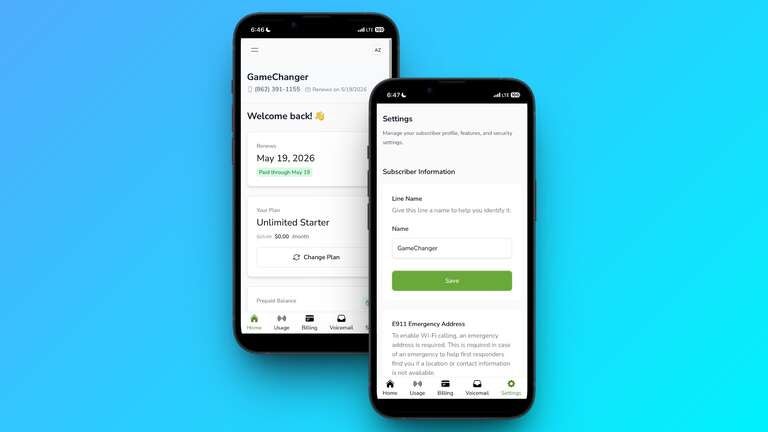
Parrot Mobile keeps things very digital-first, which helps keep prices low but also means support options feel somewhat limited compared to larger carriers. Most account management happens online through the website or app, including billing, activation, changing plans, and adding data. I personally love this hands-off approach with anything, but some may long for a more personal connection, even if that means a phone number for customer service.
That streamlined approach works well when everything is functioning normally. But when issues pop up — especially around activation, coverage, or device compatibility — support can sometimes feel slower and less robust than what users may expect from a traditional carrier.
To Parrot Mobile’s credit, the service generally feels transparent. Pricing is straightforward, there aren’t aggressive upsells everywhere, and the company does a good job explaining how its plans and activation process work. That simplicity alone makes the experience less frustrating than many larger wireless providers.
What about the perks?
Unlike major carriers that offer included perks, Parrot Mobile is simply a phone carrier. There are no free streaming services, restaurant discounts, or airline miles in sight. You’re paying for your phone service, and that is exactly what you get. Obviously, part of the allure of an MVNO like Parrot is its inexpensive plans, and with that comes the sacrifice of some other perks you may be accustomed to with a larger carrier.
The benefit is that you get exactly what you pay for — nothing more and nothing less. You’re not buying into a $ 50-per-month plan in hopes of offsetting your streaming subscriptions or getting a discount at the movie theater. Then again, with the money you do save here, you’ll have plenty leftover to spend as you see fit.
Who should consider Parrot Mobile?
Parrot Mobile makes the most sense for users who simply want affordable phone service without all the unnecessary extras attached to modern carrier plans. Light data users, budget-conscious families, travelers, kids, seniors, and anyone looking for a secondary backup line will probably find a lot of value here. I’d absolutely get it for my kids instead of adding them as another $40-per-month line to my current Verizon plan.
The service is also appealing to users who already own unlocked devices and don’t want to finance expensive new phones through a carrier. Being able to activate quickly via eSIM and customize plans without contracts gives the service a level of flexibility many larger carriers still lack.
On the other hand, power users may become frustrated by the occasional inconsistency. If reliable mobile data is critical for work, hotspot use, frequent travel, or constant streaming, the compromises become more noticeable.
Final verdict
Parrot Mobile succeeds in doing something many wireless carriers have forgotten: keeping phone service simple and affordable.
The pricing is refreshingly low, the bring-your-own-device approach works well, and the flexible plan structure makes far more sense than the bloated unlimited plans pushed by the major carriers. For many users, especially those trying to reduce monthly bills, that alone makes Parrot Mobile worth considering.
At the same time, the lower pricing comes with trade-offs. During testing, the service occasionally struggled with reliability, data consistency, and spotty coverage in certain situations. None of the issues were dealbreakers, but they were noticeable enough to separate the experience from what you’d get on a premium postpaid plan. And you know what? If you try it for a month or two and it’s not for you, just move on to something else with no harm done.
Still, if your goal is to maximize value rather than chase the absolute best wireless performance, Parrot Mobile offers a surprisingly solid experience for the price.