What do critics think of new Marvel series ‘VisionQuest’?
What do critics think of new Marvel series ‘VisionQuest’?
Find out what reviewers are saying about the latest Marvel Television series to hit Disney+.

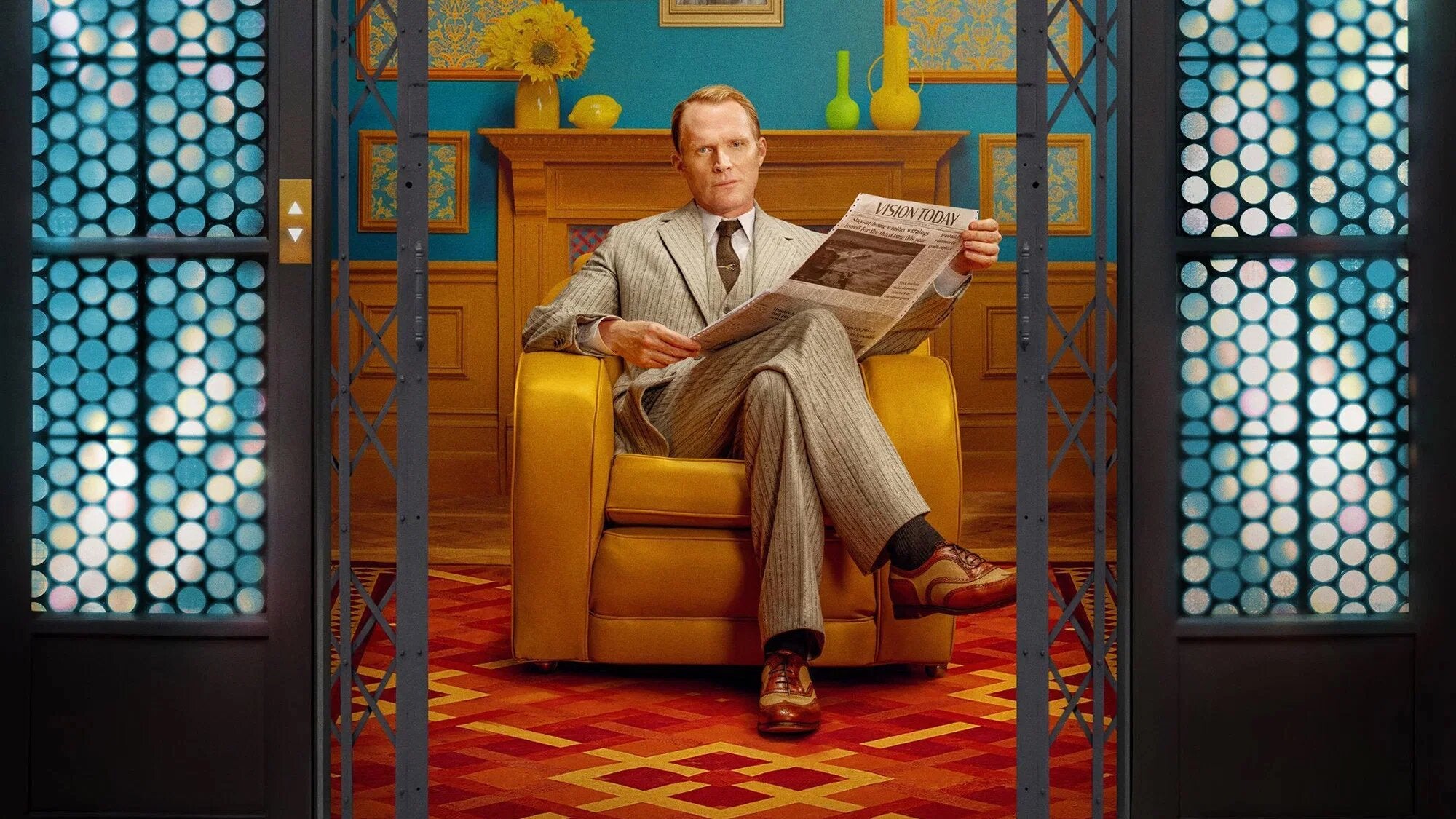
Ever since he flew off to parts unknown at the end of “WandaVision,” fans of the Marvel Cinematic Universe have been wondering what happened to the character. Now, they’re about to find out; Marvel Television’s newest series “VisionQuest” will premiere on Disney+ on Tuesday, Oct. 13 at 9:01 p.m. ET.
The series sees Paul Bettany step back into the role of Vision, a collection of AIs formerly owned by Tony Stark and given life through the power of the Mind Stone. Destroyed by Thanos, Vision is rebuilt by S.W.O.R.D. to create a sentient weapon, but in the “WandaVision” finale, the original Vision’s memories are unlocked in the hero’s new body, and he flees in order to prevent his impressive abilities from falling into the wrong hands.
In “VisionQuest,” viewers will pick up with a Vision who is continuing to live life on the run. When his paths cross with a young man who might be his son, Vision is forced to head on the run again, all while managing the various AIs — including the genocidal Ultron — in his programming.
Watch the trailer for ‘VisionQuest’
It’s been five years since “WandaVision” ended, which means that “VisionQuest” has a hard job to accomplish: it must reconnect viewers to the storylines that mattered to them from that show, while also treading new narrative ground. According to critics, it has had mixed success in balancing these various plates; the show registers an 87% on Rotten Tomatoes, but its score on Metacritic is just 58, which indicates “Mixed or Average” reviews. Find out what your most respected critics are actually saying in their own words below.
Review roundup: see what critics are saying about ‘VisionQuest’
Taylor Gates | Collider
VisionQuest has a level of sophistication to its writing that elevates it above a large percentage of other superhero fare. There are still large-scale action sequences and beats of comedy, but the series is most concerned with philosophical ideas about what it means to be human. It can occasionally get too bogged down in this for its own good — Vision’s internal struggles can start to get a tad repetitive, for instance, with him occasionally coming off overly defeatist and mopey — but the vast majority of the time, it really works, engaging with complex themes in a way that’s legitimately challenging while remaining accessible and entertaining.
David Fear | Rolling Stone
The “homework required” complaint is so old as to be a cliché at this point, and Kevin Feige & Co. have done interesting projects off of seriously strictly-for-the-heads comics material that don’t require a Ph.D. from the Marvel Cinematic University to enjoy (big up Werewolf by Night). But there’s something a little too nudge-wink insular about this cap to what the company is calling a “a groundbreaking trilogy” involving Vision’s extended family. The whole thing feels like Exhibit A for the accusation that they now essentially make big-budget, bells-and-whistles entertainment for a niche audience. It’s a show only a die-hard or a bot could love.
Jesse Schedeen | IGN
To be frank, as much as Bettany’s Vision is one of the best and most nuanced MCU characters, the series is a bit of a tough sell out of the gate. For one thing, the idyllic mansion construct feels like a rote, poor man’s recreation of what WandaVision was doing all those years ago, only without the TV sitcom conceit. It also feels like an attempted nod towards Tom King and Gabriel Hernandez Walta’s incredible 2015 Vision comic, though only in the most superficial sense. The production design in these scenes can’t really be faulted, but there’s nothing that WandaVision or Loki didn’t do better in that regard.
Sherin Nicole | RogerEbert.com
With its delightfully retro world-building, layered banter, and performances that paint rich character arcs filled with yearning for greater meaning in a universe that questions their value, “VisionQuest” may lean too hard into its poetics. Perhaps? The storytelling operates in the slipstream of lines like “What is grief, if not love persevering?” Yet, in its earnestness, “VisionQuest” is charmingly enthralling with just enough interplay between light and darkness to make us feel it—even if it’s a little goofy at times.
Angie Han | The Hollywood Reporter
When VisionQuest does let itself come up for air, it can be quite touching, anchored by a Paul Bettany performance that mines new layers from a character he’s inhabited for over a decade, and a James Spader one that’s a better use of his smarmy appeal than his introduction in 2015’s Avengers: Age of Ultron. But even as the characters reflect at length on the virtue of putting themselves out there, their series too often retreats within itself instead…This show is at its best when it’s simply focusing on its lead characters and sitting in the dynamics between them. But VisionQuest has too much else on its mind, and too few ideas for how to explore them.
Ben Gibbons | Screen Rant
Of course, VisionQuest is also a superhero series, set inside the most ambitious superhero franchise ever to appear on-screen. But, the way this story is designed and delivered makes it impossible to neatly declare it as a singular genre. Instead, VisionQuest transcends to incorporate the superhero story with sci-fi, drama, comedy, and even a dash of sitcom at times…The biggest grievance that I have now is anxiously awaiting to see what is next for these characters, and where in the MCU they could show up.
Alison Herman | Variety
The show plays with some clever concepts, particularly in its visual presentation; as the simulation scenarios pile up, so do Vision clones until a dozen exhausted, exasperated Bettanys all collapse on a hotel floor. (Much of “VisionQuest” strips away the monochrome coating to show Vision as an ordinary human, allowing Bettany to flex his fusty charm.) But this imagery is larded with so much convoluted backstory and abstract concepts that “VisionQuest” ends up in the exact same predicament as Vision himself, a synthetic being trying and mostly failing to connect with his emotions.
Jeremy Mathai | Slash Film
Once “VisionQuest” breezes through some expositional table-setting and settles into its quirky routine, showrunner Terry Matalas hardly even hesitates before upending the chessboard all over again. Every time we seem to get a handle on where this story is going, the mystery-box plotting (which the series self-deprecatingly calls out at one point) has a tendency to blow it all up in favor of even more entertaining plot twists and turns lurking around the corner. Although this gets to be one or two mysteries too many by the end of the eight-episode season — certain drawn-out reveals may give viewers flashbacks to all the Mephisto fan-theories and fever dreams from “WandaVision” – the answers that Matalas and his writers come up with usually skew towards servicing the characters rather than the MCU itself.

Disney+
Disney+ is a video streaming service with over 13,000 series and films from Disney, Pixar, Marvel, Star Wars, National Geographic, The Muppets, and more. It is available in 61 countries and 21 languages. It is notable for its popular original series like “The Mandalorian,” “Ms. Marvel,” “Loki,” “Obi-Wan Kenobi,” and “Andor.”