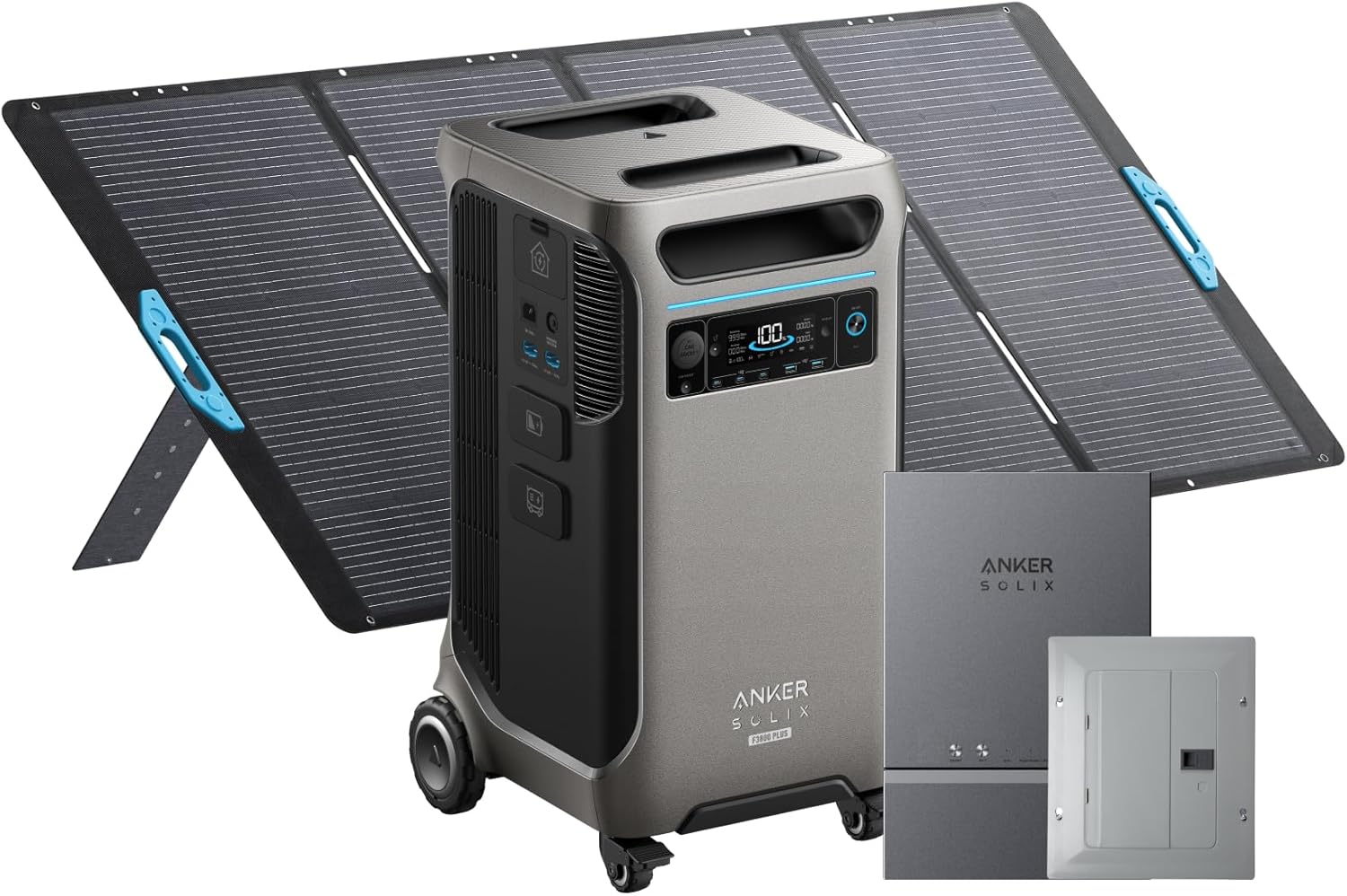
Anker SOLIX FS3800 Plus: Whole-home power at the push of a button
Anker SOLIX FS3800 Plus: Whole-home power at the push of a button
Stay online — and streaming — during blackouts or off the grid.


Growing up in New Jersey, I remember many stormy nights and winter blizzards when the power would go out. We’d lose lights, heat, and
In our always-on, always-connected world, losing power isn’t just inconvenient — it can completely derail daily life. Smart home systems stop working, remote jobs like mine are interrupted, and if you’ve got kids, losing access to streaming media can turn a quiet evening into chaos.
That’s where the Anker SOLIX F3800 Plus comes in. It’s more than a backup battery — it’s peace of mind for the modern home. Whether working, streaming, or staying connected to the people and tools you rely on, this powerhouse ensures that you’re covered when the grid goes down or if you just want to get off the grid entirely.

Why it’s important to stay online
More people than ever before are working from home, powering their homes with all kinds of smart devices, and, of course, streaming their favorite media for multiple hours every day. Power outages can be a giant pain, lasting a few minutes, a few hours, or even multiple days. No one wants to be stuck without internet, unable to work, play, or stream for any longer than they have to be.
I’ve been working remotely since 2008 and have experienced my share of power outages. Most were just a few hours or maybe a day, tops, but some were longer than I care to remember (thanks, Hurricane Irene). When the power is out, I’m unable to work from my home office, meaning I have to venture out to a nearby coffeeshop or friend’s house to take care of business, and anyone who’s ever worked from an unfamiliar location knows how hard it can be actually to get work done in that scenario.
Staying online isn’t just about remote work, however. It’s also about keeping your smart home devices, like cameras and sensors, connected so you remain safe at home and know what’s happening both locally and elsewhere while being affected by the outage. This is a minor inconvenience for some, but most cord-cutters will also be cut off from streaming any movies or TV shows, and most importantly during a crisis, news. It’s definitely a 2025 problem, but it’s still one that can’t be ignored.
What is the Anker SOLIX F3800 Plus
You most likely know the Anker brand to some extent. They’ve been around for years, making ever-improving battery devices to power everything from your phone to your camping gear and now, your entire house. On the smallest scale, an Anker battery can juice up your phone when the battery is running low, and on the largest, the new SOLIX devices can power your entire house when things go awry.
The Anker SOLIX F3800 Plus is a beast of a backup “generator” that will keep you up and running when a power outage strikes or even if you decide to head off the grid while still staying connected. While it may seem like the F3800 Plus is just another, bigger battery that will power up some of your devices, it’s anything but. The F3800 Plus is a 3,840Wh battery that is expandable to a whopping 26.9 kWh. With dual 120V/240V, it’s capable of 6,000W continuous and 9,000W peak. It charges via AC input (1,800W max) or solar with dual MPPT controllers up to 3,200W.
The F3800 Plus has an insane number of ports (15), including USB-A, USB-C, a 12V car outlet, solar input, multiple 120V standard ports, and a 240V port. You can plug in nearly all of the devices you’ll find around your house, including appliances, routers, modems, mesh systems, security devices, and more. There are also ports to connect additional SOLIX batteries or a compatible gas generator for charging the F3800 Plus.
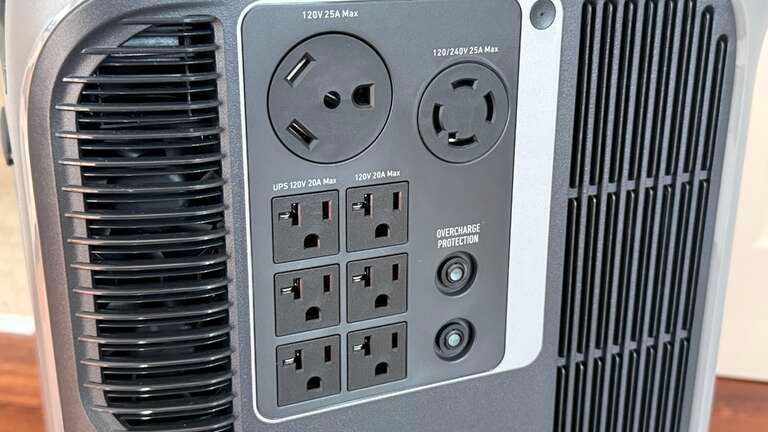
As you can imagine, all of this comes in a very large package, standing nearly 30” tall and weighing over 135 lbs. Thankfully, the F3800 Plus has a built-in handle and multiple sets of wheels, so you can easily move it around on flat surfaces. Carrying it anywhere is definitely a two-person job, though. I plan to leave it in my basement until I actually need it, and even then, I’ll probably have plenty of extension cords on hand so it won’t need to go too far.
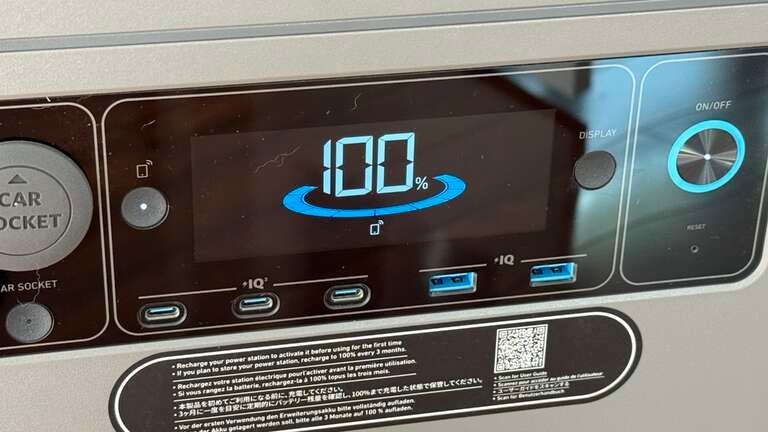
You can also control and monitor everything from the excellent Anker app as well. Once connected via Bluetooth or WiFi, you can monitor inputs and outputs, energy use, charging status, temperature, etc. You can make changes within seconds and have everything you need easily within a few taps.
Keep in mind that a battery this power, is not cheap. The SOLIX F3800 Plus retails for $3,999^. That’s not an easy price to swallow, especially when you might want to expand your setup with a Smart Home Panel, solar panels for charging, or extra batteries.
^= At the time of writing, the F3800 Plus is $1,200 off at Anker using the code WSTDMDU224.
How it keeps you powered
Unlike a simple UPS or smaller backup battery, the SOLIX F3800 Plus is much more like a whole-house generator — and in fact can be with the right accessories (more on that later) — in that it can power up many of your essential devices at the same time so you never miss a beat while your house is without power.
Let’s break down some of the ways you can stay online with only the power of the F3800 Plus.
Household essentials
The most obvious starting point when deciding what to keep powered during an outage is your essential, everyday devices like your refrigerator, lights, and comfort items like fans. These basics help maintain a sense of normalcy and prevent inconvenience from becoming a real problem. With a capable power system, you could also use small kitchen appliances like a microwave for quick meals, or a coffee maker or electric kettle to keep your daily routine intact.
A refrigerator is especially valuable, helping preserve perishable food and preventing waste, an often overlooked item during an outage. Depending on its size and energy consumption, you may be able to keep it running for a full day or more. However, it’s important to be mindful of higher-draw appliances. While useful in extreme situations, devices like space heaters, blenders, and toasters consume a lot of power and may not be worth running unless absolutely necessary.
With a power station like the SOLIX F3800 Plus, you’re not limited to just the basics. It can handle larger appliances such as sump pumps, which are crucial for preventing basement flooding during storms, and even your washer or dryer. While doing laundry might not be your top priority during a blackout, having the ability to do so if needed adds a layer of flexibility and convenience to your emergency setup.
Ultimately, backup power isn’t just about surviving an outage — it’s about keeping your household running smoothly, minimizing disruption, and maintaining comfort and control in uncertain moments.
Internet devices
Once you’ve covered the essentials like lighting, refrigeration, and device charging, the next logical step in your power-priority hierarchy should be your internet equipment — modems, routers, mesh systems, and other devices that keep your home connected. These are often overlooked in backup power planning, but are crucial in maintaining communication, productivity, and entertainment, especially during extended outages.
Think about it, a laptop or phone isn’t much use if you can’t access the internet. Whether you work remotely, manage smart home devices, stay in touch with family, or just need to keep your kids occupied during the storm outside, your internet hardware forms the backbone of your digital life. Keeping it running ensures you’re not completely disconnected from the outside world.
Fortunately, these devices are also some of the most energy-efficient electronics in your home. A modem and router combo often draws less than 20 watts, meaning you can keep your whole network online for hours (or even days) with a modest battery backup or solar-powered backup. Devices like the F3800 Plus are more than capable of handling that load alongside other low-draw essentials.
However, you also need to set realistic expectations. While your backup system can keep your home network powered and functional, it can’t influence what’s happening beyond your walls. If your internet service provider is experiencing an outage, caused by a downed pole, damaged line, or other grid issue, having power at home won’t magically restore your connection. Your devices may be powered on and ready, but if the ISP’s infrastructure is offline, you’ll be out of luck.
That’s why it’s wise to have backup communication options, like cellular hotspots or tethering from a phone, in case the wired internet goes down entirely. Still, for many short-term outages, simply keeping your modem and router powered can greatly affect how connected and functional your home remains.

Smart home and security
If you’re anything like me, you probably have at least a few smart devices scattered throughout your home. Maybe it’s a couple of voice assistants in the kitchen and living room, a video doorbell out front, some indoor or outdoor security cameras, or even smart plugs and light switches you’ve come to rely on more than you realized. These devices, while often low-power, have become deeply integrated into our daily routines, and when the power goes out, losing them can feel like losing control or awareness over your home.
During an outage, having backup power for these devices isn’t just about convenience — it can be about peace of mind. For example, keeping your security system online ensures you can still monitor who’s at your door or check what’s happening in and around your house. Voice assistants like Alexa or Google Assistant can still be used to control lights, check the weather, or play music — assuming your internet connection is also powered. Even simple things like turning lights on and off remotely or getting alerts from a sensor can make a big difference when navigating a disruption.
Thanks to their low power draw, it’s surprisingly easy to keep all these devices running on a single home battery backup system or portable power station like the F3800 Plus. Most smart devices consume only a few watts apiece, so you could feasibly keep your entire smart home ecosystem online for hours — even days — depending on your setup. And beyond just the obvious devices, it’s worth thinking about the less glamorous but equally important ones. Your garage door opener, for instance, may not cross your mind until you realize you’re stuck inside (or worse, outside) during a power outage. Having power routed to it ensures you’re not physically locked out of your home or unable to drive somewhere if needed.
If you own an electric vehicle, you can also top off your car’s battery just enough to make a quick trip. Whether you’re running out to pick up supplies, getting to a safer location, or simply recharging at a public station, having that little extra charge could make a meaningful difference. You don’t need to charge your EV fully — even 10 or 20 miles of range can be enough in a pinch.
The key here is planning and prioritization. With the right setup, you can ensure that your essentials are covered, and the everyday comforts and conveniences you rely on — like smart tech and home access — stay functional too. Power resilience isn’t just about survival in the modern home, where everything from lights to locks may be digitally connected. It’s about maintaining normalcy, security, and flexibility when the grid goes down.
Streaming devices
Once your essential needs are met — lights, refrigeration, connectivity — it’s worth considering how entertainment can keep everyone calm and comfortable during an outage (which may also be essential to some people). Devices like smart TVs, streaming sticks (Roku, Fire TV, Apple TV), or compact media boxes are surprisingly power-efficient, meaning you can enjoy your favorite shows or movies without putting a major dent in your backup battery. Assuming your internet connection is still up and running (either through a powered modem/router setup or a mobile hotspot), you can stream content just like you would under normal conditions. Even a tablet or laptop with a decent charge can serve as a makeshift home theater. Don’t underestimate the value of keeping kids occupied or unwinding during an otherwise stressful outage!
Entertainment doesn’t stop with streaming, either. Portable Bluetooth speakers, e-readers like the Kindle, handheld gaming consoles like the Nintendo Switch, or even board games powered by a single lamp can all help fill the downtime. Many of these devices sip power and can run for hours or days on a small amount of energy. A quality battery backup system gives you the flexibility to keep these comfort items in the mix, allowing your household to feel more like itself, even in less-than-ideal circumstances.
Extended backup
One of the most significant advantages of a system like the SOLIX F3800 Plus is its scalability and flexibility regarding extended backup power. Out of the box, it provides a solid amount of energy storage and output to cover essential devices during a typical outage. But if you’re facing longer-term power interruptions or want the peace of mind with extra capacity, you can easily expand your setup by adding additional battery packs. These external batteries increase your stored energy, meaning you can keep critical appliances, internet gear, and comfort devices running for days without interruption. You can connect multiple F3800 Plus units in parallel to boost your power output and storage even further—perfect for larger homes or heavier power demands.
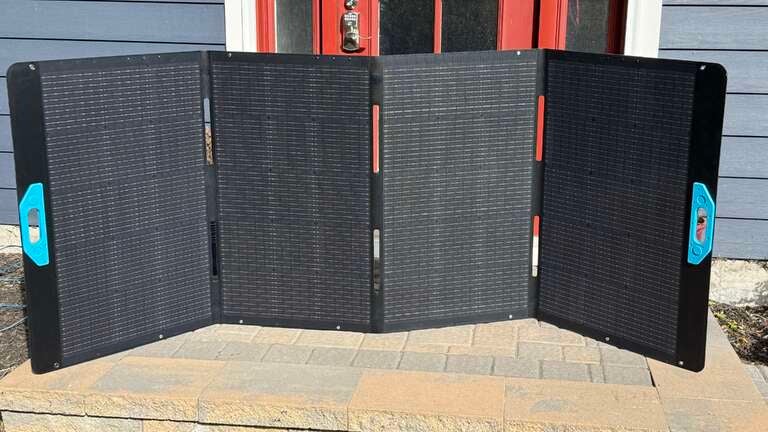
Another key option is solar charging: By connecting solar panels, you can recharge your F3800 using clean, renewable energy. This is especially valuable during extended outages when grid power is unavailable. Solar panels provide a sustainable way to top off your batteries during daylight hours, reducing or eliminating the need for fuel-based generators. Want to go off the grid entirely? Bring the F3800 Plus and one (or more) solar panels, and stay charged up as long as you need to be.
During an extended outage, pairing the F3800 Plus with a gas-powered generator provides an excellent hybrid solution for those wanting to go further. While the F3800 Plus delivers quiet, clean power, a generator can recharge the system during prolonged outages or when solar input isn’t available, like on cloudy days or at night. This combination allows you to enjoy the benefits of a battery backup — instant power, no fuel consumption, and silent operation — while still having the option to generate electricity on demand for extended emergencies. Whether you expand with extra batteries, link multiple units, add solar panels, or incorporate a generator, the F3800’s modular design offers a versatile, reliable way to keep your home powered no matter how long the lights stay out.
Smart Home Panel
If you’re going all-in with the F3800 Plus, the Anker Smart Home Power Panel is something you’ll also want to look at. Rather than just plugging devices you wish to use directly into your F3800 Plus (which might be a chore if you have a lot of powered devices), the Smart Home Power Panel connects to your home’s electrical panel, providing you with instant power as soon as you’re cut off from the grid. While not cheap (the panel starts around $1,599) it’s a worthy option for many setups as it also provides real-time energy use monitoring, alerts that will let the F3800 Plus know to be charged to 100% before an incoming storm, and general peace of mind that you’ll never be without power.
I haven’t pulled the trigger on the panel just yet, but it’s definitely on my want list. I’m waiting for the housing committee (AKA my wife) to sign off before we dive much deeper — so cross your fingers for me.
Is it worth it?
The $4k question — is it worth it? You’ll have to break it down and see what really matters to you and your specific situation.
Here’s where it might be a good buy for you:
- You often lose power where you live, sometimes for multiple hours (or even days).
- You’re far enough off the grid that having the extra power — for regular use or backup — could make your living situation better.
- You’re contemplating a gas generator but want something greener and more efficient.
- You want to be able to live like you do on a typical day with full power.
- You’re like me and just want the smartest, nerdiest house you can possibly create.
Conversely, if you’re a yes for any of these, you might be better suited with a smaller model:
- You don’t often lose power and just want something as backup, just in case.
- When you do lose power, you just need the essentials, like lights to operate.
- You need something more portable and easy enough for one person to move around.
- You’re old-school — a gas generator is just fine.
There’s no way around it: Spending $4,000 or more (if you get solar panels, a smart panel, or multiple batteries) isn’t easy to swallow, but it might also be well worth it if you want to outfit your home with the latest backup tech. Whole-house generators are expensive and may not even be an option for you, and typical gas generators are loud and can get pricey when running for multiple days.
With the SOLIX F3800 Plus, you get easy use and the option to expand to suit your needs. For me, just having the unit by itself is enough so that I can plug in whatever devices I need to be powered during an outage. While the Smart Home Panel is a want, I’m not sure I’ll pull the trigger anytime soon, and multiple batteries aren’t in the picture for now either. I do have solar panels I can use to charge my F3800 if needed as well, which ends up being right in my sweet spot for having the backup power when I need it, but also for not having to think too much about it when I don’t.
For many, smaller options like the Anker SOLIX C1000 will do just fine for true emergency power (and a fraction of the price). Still, those who want to keep most of their lives running normally during an outage may want to explore the multitude of benefits a setup with the SOLIX F3800 Plus offers.