Have streaming prices really only risen 8% since 2022?
Have streaming prices really only risen 8% since 2022?
New data from Parks Associates shows the average price of a streaming plan has gone up less than $1 in the past four years. How can that be?

How much more are you paying for your streaming services in 2026 than you were in 2022? The price of ad-free Disney+ has risen from $8 early in 2022 to over $20 in 2026, and many other streamers have seen similar price hikes on their commercial-free plans. But new data from Parks Associates shows that the average price of streaming services has risen by just 8% in the past four years. While that might seem unbelievable, the data shows that companies are keeping entry-level plans relatively cheap in exchange for showing ads while hiking up the cost of more premium options.
Key Details:
- Small increase: The average price of a streaming plan has risen only 8% in the past four years.
- Counterbalance: The launch of lower-cost streamers and plans has helped keep that average price down.
- You do it: The increase in the number of streamers puts the onus on customers to sift through their options to find the content they want.
The data from Parks shows that across more than 300 subscription video-on-demand (SVOD) and virtual multi-channel video programming distributor (vMVPD) services in the United States, the price of a base-tier subscription has risen just 8% in the past four years.
In 2022, that cost was $10.20, and in 2026, it has risen to $11.08. The key fact to remember from Parks’ data is that its study measures entry-level streaming plans; many streaming services have launched lower-cost, ad-supported plans since 2022, deliberately keeping their entry-level prices lower while reserving more extreme price hikes for ad-free tiers.
This fact is best demonstrated by Apple TV, the only big-time streamer left in the U.S. that only sells an ad-free tier. The price of that plan has risen by over 50% since 2022, far greater than the 8% baseline average increase. Other ad-free plans around streaming have seen equivalent or even larger jumps.
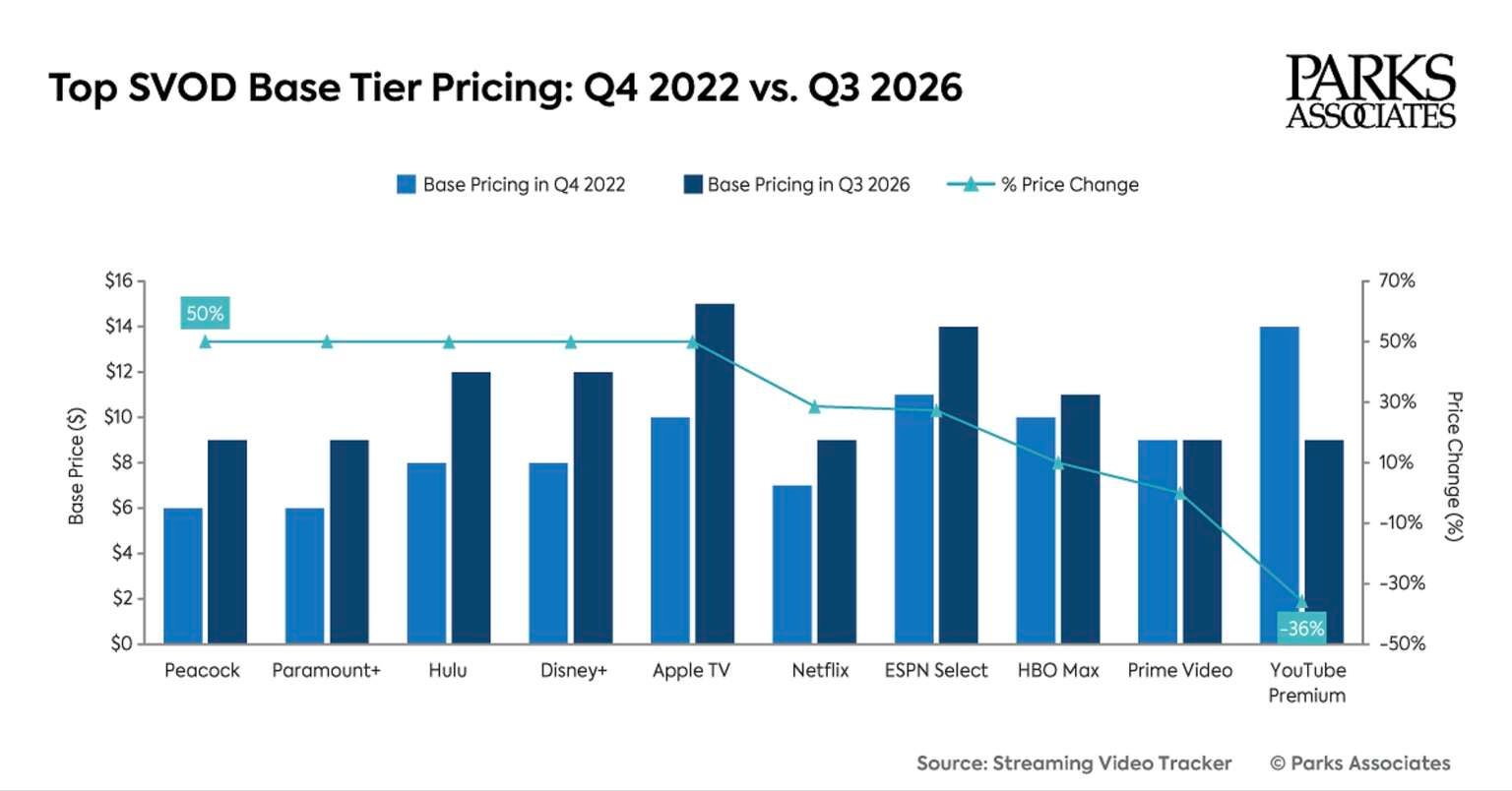
Click chart to expand to full size.
“Consumers are seeing higher prices from many of the streaming services they use most, but the broader market tells a more nuanced story,” Parks Associates executive Jennifer Kent said. “Lower-cost services, new bundles, ad-supported subscriptions, and specialized content offerings are creating more pricing options. Providers are competing on content, packaging, and price to deliver value.”
For customers, this competition to deliver value usually ends up in having to make a compromise or two. Viewers have been forced to accept ad plans in order to avoid paying $15 to $20 per month for a single service. While the launch of additional low-cost streamers like Howdy have helped keep average prices down, the influx of new streaming services into the market has led to further content fragmentation, requiring cord-cutters to pay for more services to simply see the shows and movies they want to watch.
That puts the burden on viewers to not only make sure they know where their chosen content is streaming, but also where to watch it for the lowest possible price. It’s a tough ask of viewers who are already frustrated by fragmented content, rising prices, and fewer features as streamers continue to do everything they can to show investors they’re profitable.

Apple TV
Apple TV (formerly known as Apple TV+) is a subscription video streaming service for $14.99 per month, offering a growing slate of original series, films, documentaries, and specials. Unlike other platforms that combine licensed titles with originals, Apple TV is built entirely around exclusive programming, making it the home of critically acclaimed hits such as “Ted Lasso,” “Severance,” “The Morning Show,” and “Silo.” Its lineup continues to expand with award-winning dramas, comedies, family-friendly shows, and blockbuster original films like “CODA,” which won the Academy Award for Best Picture.