Prime Video Attempts High Risk, High Reward Strategy with Ads
Prime Video Attempts High Risk, High Reward Strategy with Ads

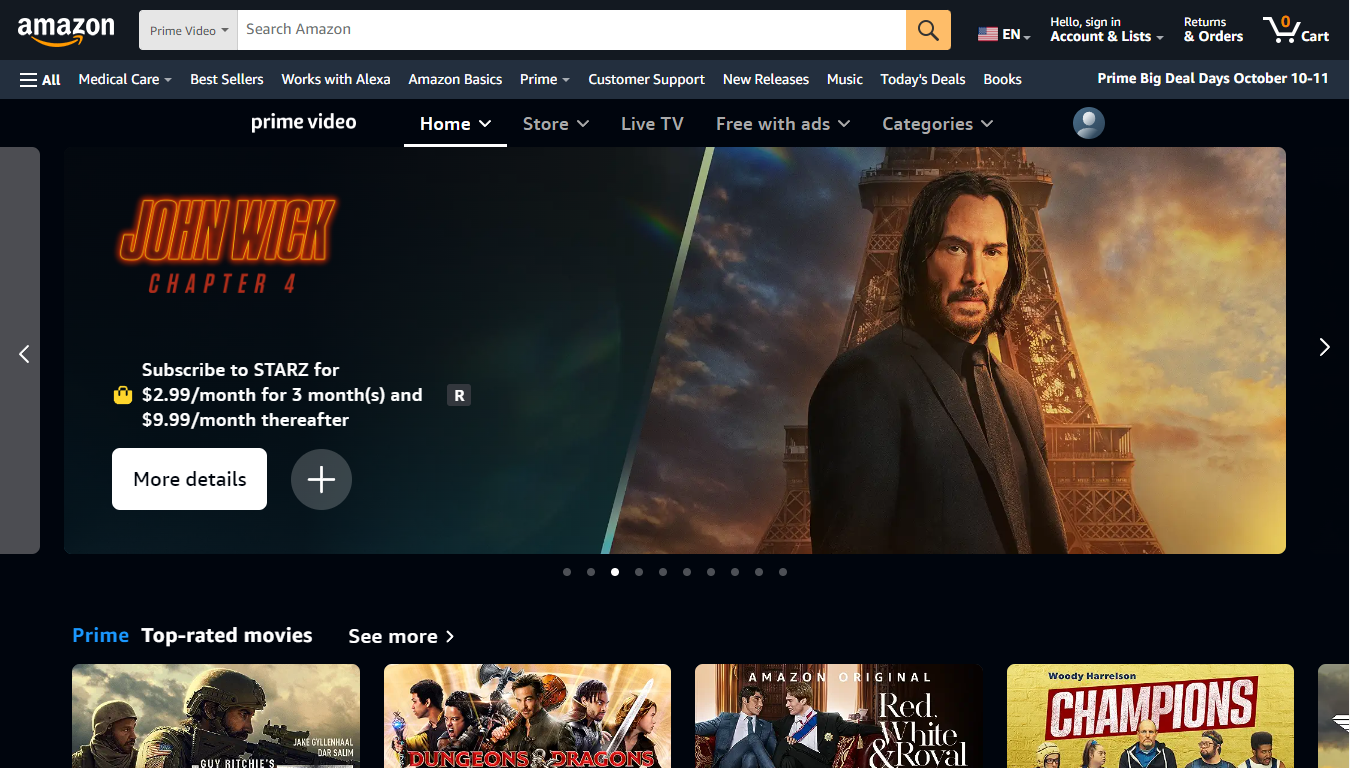
Somewhat surprisingly, Amazon is both innovating and following an industry-wide streaming trend all at the same time. The service announced late last week that the tech company will be introducing advertising to its premium streaming platform Prime Video for the first time, and customers could choose between a cheaper ad-supported tier or a more expensive ad-free streaming option.
That strategy has been adopted by most of the biggest platforms in the industry, as Disney+, Hulu, Max, and Netflix all offer cheaper ad-supported tiers. The difference in Prime Video’s case is that it is bringing ads to its existing streaming plan, rather than creating a new, lower-priced option that existing customers would be able to downgrade to use.
On the one hand, this is a shrewd play by Amazon. By introducing ads to its already-existing streaming plan, Amazon is putting the onus on users to leave their subscription as it is or pay $2.99 per month extra to upgrade. Most customers will likely choose the former option, as it asks less of them in terms of both effort and money. There won’t be any surveys about how few or how many customers have opted for the ad-supported plan, as 100% of users will be automatically signed up for it unless they choose to pay more to go ad-free.
The other strategically advantageous part of the move is that by keeping customers on the cheaper plan, Amazon will almost certainly be increasing revenue. Ad-supported streaming brings in more money per subscriber than ad-free plans do because streamers get to collect money both from the customers themselves as well as from advertisers based on how many users are seeing commercials. Even Amazon, with its hundreds of billions of dollars in yearly retail revenue, is not insulated from market forces that dictate streamers have to show a profit nowadays, and even if it was it would not leave money on the table by keeping its streaming platform ad-free forever.
On the other hand, Amazon has given dissatisfied customers nowhere to go with this strategy. Other streamers who have introduced ad-supported streaming have decided to make their commercial tiers cheaper, to give ad-free customers facing a price increase an alternative to canceling their service altogether. Prime Video is offering no such alternative.
A survey from July indicates that 69% of Americans currently subscribe to Prime Video, and that the service rated first against all of its competitors in terms of subscription price. Now that Amazon is introducing ads to its already-existing Prime Video plan instead of creating a new tier for ads, the perception of its value among users could be in for a big hit.
Prime Video will first start incorporating ads in early 2024, and American customers will be some of the first in the world to see the changeover. It will bear watching to see if the company sees plummeting customer satisfaction ratings in that time, though if a large number of subscribers cancel it will be harder to tell, as Amazon does not report its subscriber count publicly. Converting the current ad-free Prime Video plan to an ad-supported plan is a savvy business move by Amazon, but it does carry big risks for the company.

Prime Video
Prime Video is a subscription video streaming service that includes on-demand access to 10,000+ movies, TV shows, and Prime Originals like “The Lord of the Rings: The Rings of Power,” “Jack Ryan,” “The Marvelous Mrs. Maisel,” “The Boys,” and more. Subscribers can also add third-party services like Max, Showtime, STARZ, and dozens more with Prime Video Channels. Prime Video also offers exclusive live access to NFL Thursday Night Football.