Streaming has robbed March Madness of some of its joy
Streaming has robbed March Madness of some of its joy
March Madness used to be simple. Now it’s anything but.

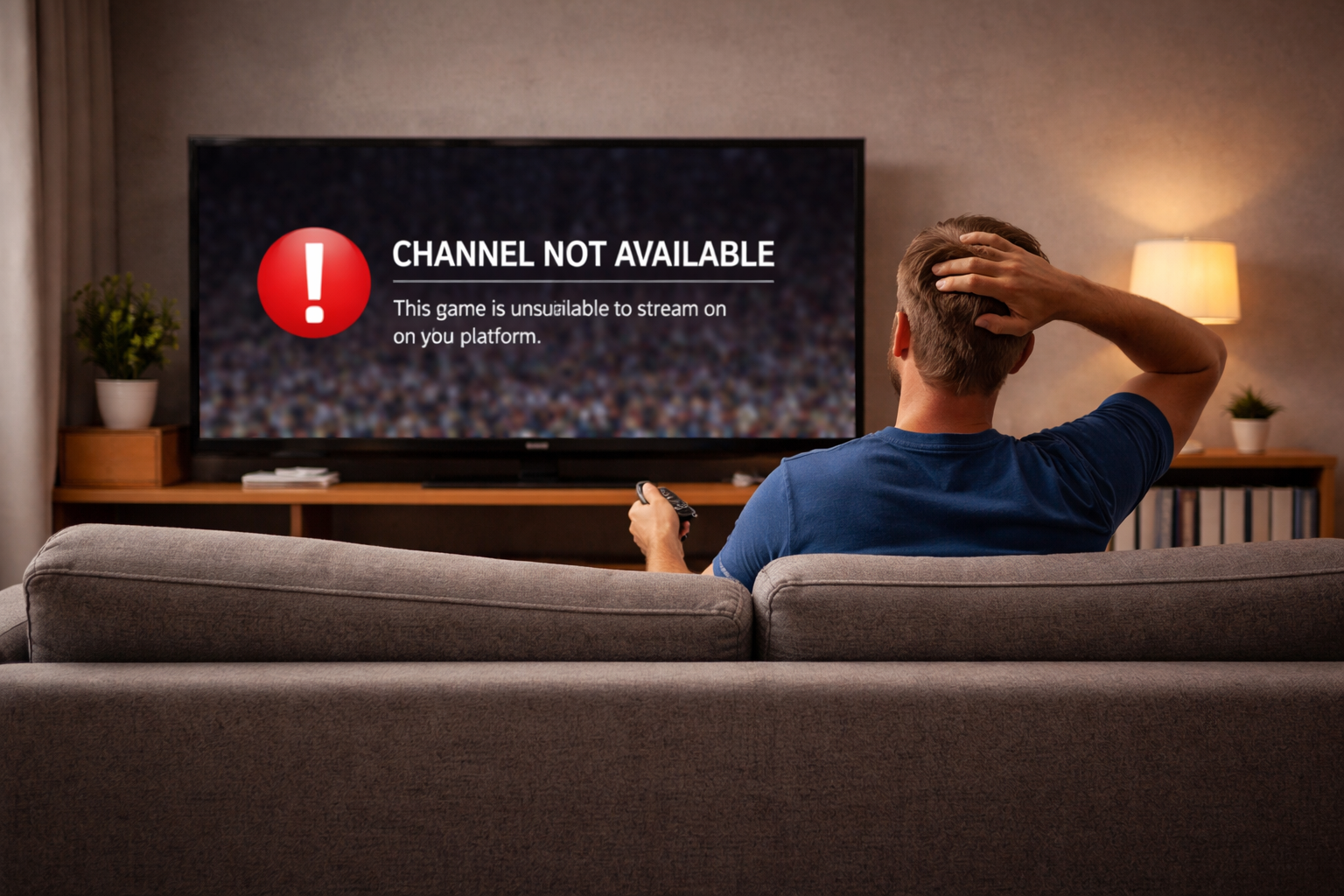
It wasn’t that long ago when I considered watching the first two days of the NCAA Men’s Basketball Tournament to be amongst the highest of holy days of any sports fan’s year. From spending all day at a sports bar with friends in my 20s to sitting on the couch with nothing but my bracket, some snacks, and the remote in my 30s, those days of wall-to-wall adrenaline-filled First Round games are some of my favorite memories. But somewhere along the way, watching March Madness stopped being a simple tradition that I looked forward to every year, and became something akin to work.
Now in my 40s, a not-insignificant portion of that magic is gone; not because the action isn’t still thrilling, not because I don’t still live and die with every line of my bracket, but because the hoops (no pun intended) that the NCAA and major media companies have forced us to jump through to watch all of the games have robbed the event of some of its charm and innocence, and, in turn, its enjoyment.
Before it was commonplace to have every sporting event played the world over available at the touch of your fingertips, it was such a treat for sports fans to be able to become engrossed in 12+ hours of action on two consecutive days. Regardless of whether we had ever heard of Siena or had any idea where High Point is located, there was an electricity surrounding the first two days of March Madness that I have often longed for, not only from the tournament, but from many other major events in my life.
Perhaps it’s age, perhaps it’s cynicism, perhaps it’s the overwhelming onslaught of content that is hoisted upon us these days, but for me, it feels like the sheer complexity of figuring out how to watch the tournament has made the experience feel far less pure and far more transactional than it ever did before.
Now, don’t get me wrong, I am well aware that all levels of all sports have essentially become little more than exercises in maximizing corporate profit, especially on the collegiate levels; however, the fragmentation of rights, the disparity in channel availability, the ever-rising costs to watch the games have made what is arguably the greatest two days on the sports calendar increasingly tedious and frustrating.
Earlier this week, when I was putting together The Streamable’s guide to how to watch the Men's Basketball Tournament, I found myself having to take multiple detours to explain how cord-cutters could combine Sling TV and Paramount+ to watch all of the games, because neither would provide access to all of them. Or, why it could make sense to watch on Fubo and HBO Max, but Fubo and Paramount+ would be redundant. To make matters worse, if you do go this route, your viewing experience will be demonstrably worse because you won’t be able to easily bounce between games within either platform, let alone watch them all via a single multiview.
I understand how the carriage and retransmission negotiations that dictate which channels are available on which streamers work, but that doesn’t make it any less frustrating for consumers who pay for a service that works best for them for 51 weeks of the year, but then they have to add on something else to cover a tentpole event happening during Week 52. Because Sling doesn’t carry CBS and Fubo doesn’t offer Warner Bros. Discovery channels TBS, TNT, and truTV, folks who pay for Fubo or Sling year-round have to add one month of another streamer just to catch all of March Madness, adding more cost onto what is likely an already ballooning streaming budget.
And even if you do subscribe to a streamer that has all of the channels that carry the games, it is still increasingly expensive to the point of cost-prohibitiveness for many people. I know that I am dating myself here, but I started obsessively watching the tournament when all you needed was a TV and an over-the-air antenna. Admittedly, you didn’t get to see every game that way, but you also weren’t paying $80 to $100 per month to do so either.
Today, if you are signing up for a streaming service (or streaming services) to watch the tournament, at minimum, you are going to be spending $21.49 to watch via two unconnected on-demand platforms, $45 to watch on a single live TV streamer, or — if you are lucky and qualify — for free on a 21-day trial that will eventually expire and turn into an $83 per month bill if you don’t cancel.
Working in this industry for as long as I have, I realize that complaining about rising prices and rights proliferation across the streaming world is essentially the modern equivalent of “Old Man Yells at Clouds,” but when you watch something that has brought you so much joy for so many years, being mercilessly eroded by short-sighted greed, it is disheartening at best, and demoralizing at worst.
Nonetheless, when the tournament tips off today on CBS at 12:15 p.m. ET, my beloved No. 8 Ohio State Buckeyes take on the No. 9 TCU Horned Frogs, I will be seated on my couch with chips and drinks at the ready, hoping that, for a few days at least, I can forget about apps, rising prices, and channel lineups, and just revel in the Madness that is March.

YouTube TV
YouTube TV is a live TV streaming service with more than 60 channels for $82.99/month. This plan includes local channels 32 of the top 35 cable channels, and regional sports networks (RSNs) in select markets. The base plan includes more than 100 live channels, including major broadcast networks like ABC, CBS, FOX, and NBC, as well as popular cable channels such as ESPN, CNN, FX, USA Network, and TNT. Local channels are included in most markets, making YouTube TV a full replacement for traditional cable for many viewers.