Does absence of streaming shows make the heart grow fonder?
Does absence of streaming shows make the heart grow fonder?
New data from Ampere Analysis suggests that long gaps between seasons may be beneficial for streaming services.

It’s not just your imagination — the gaps between new seasons of your favorite TV shows are getting longer. New research from Ampere Analysis shows that the wait between new scripted TV seasons has nearly doubled since 2020, much to the chagrin of audiences.
While streaming subscribers have tried to push back against these long waits by canceling their subscriptions between seasons, Ampere’s data shows that such practices have little to no effect on how platforms stagger their top releases and that services are, in fact, incentivized to keep wait times long.
Ampere’s study shows that viewers are in no way imagining longer wait times between seasons of scripted TV shows. The average gap between seasons of scripted original streaming titles from Apple TV, Disney+, HBO Max, Hulu, Netflix, Paramount+, and Peacock hit 22 months in 2025, up from a low of 12 months in 2020.
To be sure, studios were incentivized to churn out content during the height of the COVID-19 pandemic, so a correction toward longer delays was inevitable. But as the data shows, wait times for new seasons of scripted originals have nearly doubled in the last five years.
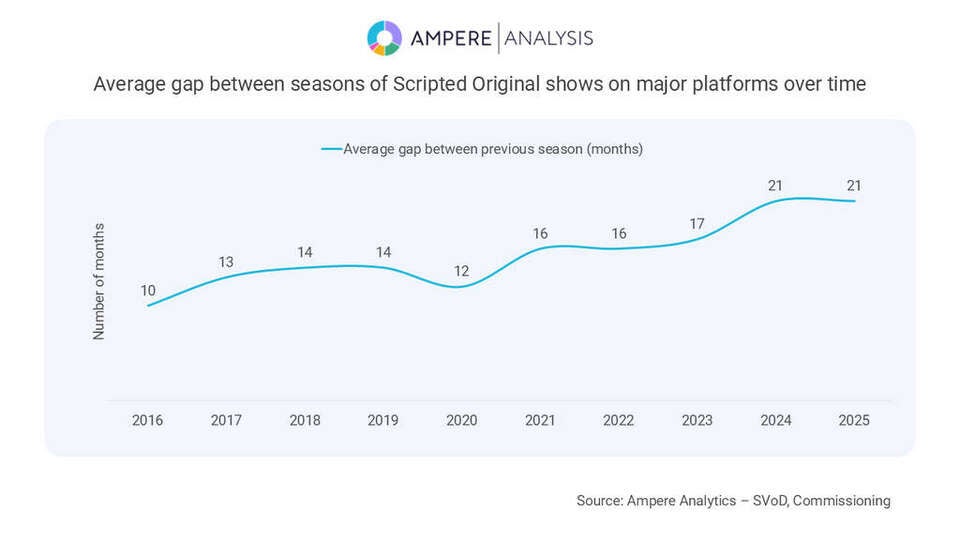
Click chart to expand.
Viewers have tried to use the month-to-month nature of streaming subscriptions to their advantage to combat the growing gaps between seasons of their favorite shows. In the first quarter of 2026, 54% of respondents told Ampere that they would simply cancel a subscription they didn’t use often enough.
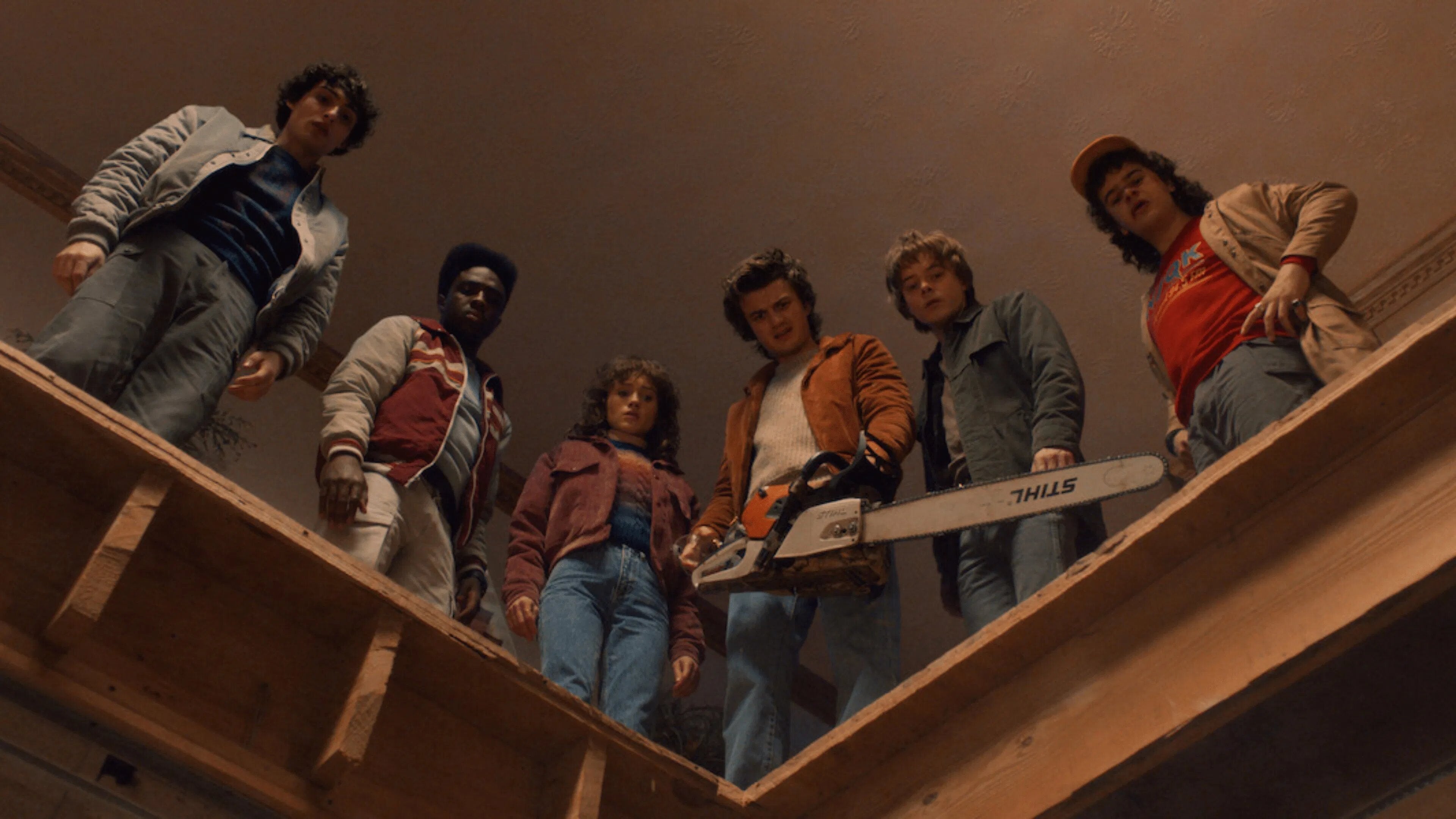
But do streaming services really care? Ampere’s numbers suggest that streamers may actually feel incentivized to keep viewers waiting for a longer period of time. The research firm found that in the second half of 2025, viewing of “Stranger Things” on Netflix grew by 300% as fans prepared themselves for the release of the final season three years after the debut of Season 4. Viewership of the show’s first season was particularly strong, suggesting that repeat viewers and new fans were flocking to the show ahead of its finale.
Indeed, the longer the wait, the more engagement a show can generate when it finally brings new episodes to audiences. Original shows with gaps of over 30 months between seasons produce the highest amount of internet search activity in the month before the new season debuts; Ampere found that Apple TV’s “Severance” and Netflix’s “Wednesday” both generated nearly double the average amount of engagement with their newest seasons, after long hiatuses.
The data seems to point to a clear pattern: leaving longer gaps between TV seasons creates a risk that subscribers will cancel while they wait, but it also generates more fan interest when the show returns. This template can be less effective across certain genres, but overall, it can be a highly successful tactic for streamers to employ.
And as it turns out, the risk of cancellation may only be a short-term one. A 2025 study from Antenna shows that 45% of viewers who cancel a streaming service resubscribe within one year. So, even if streamers lose viewers who are waiting for a show to return, odds are good that they will come back once a new season is close.
This isn’t to say that customers canceling and resubscribing is the ideal scenario for streamers. Of course, every streaming service would love to keep all subscribers from canceling if they could; existing customers cost less to keep, and provide a steady source of revenue. But winning back departed customers with a new season of their favorite show is still better than seeing them leave and never return.
So, what does all this mean for viewers? Unfortunately, it means that streamers aren’t really incentivized to speed up production of original scripted TV shows between seasons. The engagement halo effect of leaving long gaps between seasons means that streamers will likely keep fans waiting, no matter how much angst they vent online about the lengthening delays between new TV seasons.

Netflix
Netflix is a leading subscription-based video streaming service that offers on-demand access to an extensive library of over 3,000 movies, 2,000+ TV shows, and a growing collection of acclaimed Netflix originals. Renowned for producing groundbreaking content, Netflix has become a cultural powerhouse with hit originals like “Stranger Things,” “Wednesday,” “Squid Game,” “The Crown,” “Tiger King,” “Bridgerton,” “The Witcher,” and “Black Mirror.”