YouTube is the future of streaming — and the future is now
YouTube is the future of streaming — and the future is now
Data shows that not only is YouTube the top streaming platform in use today, but customers are using it to stream traditional TV and video more often.

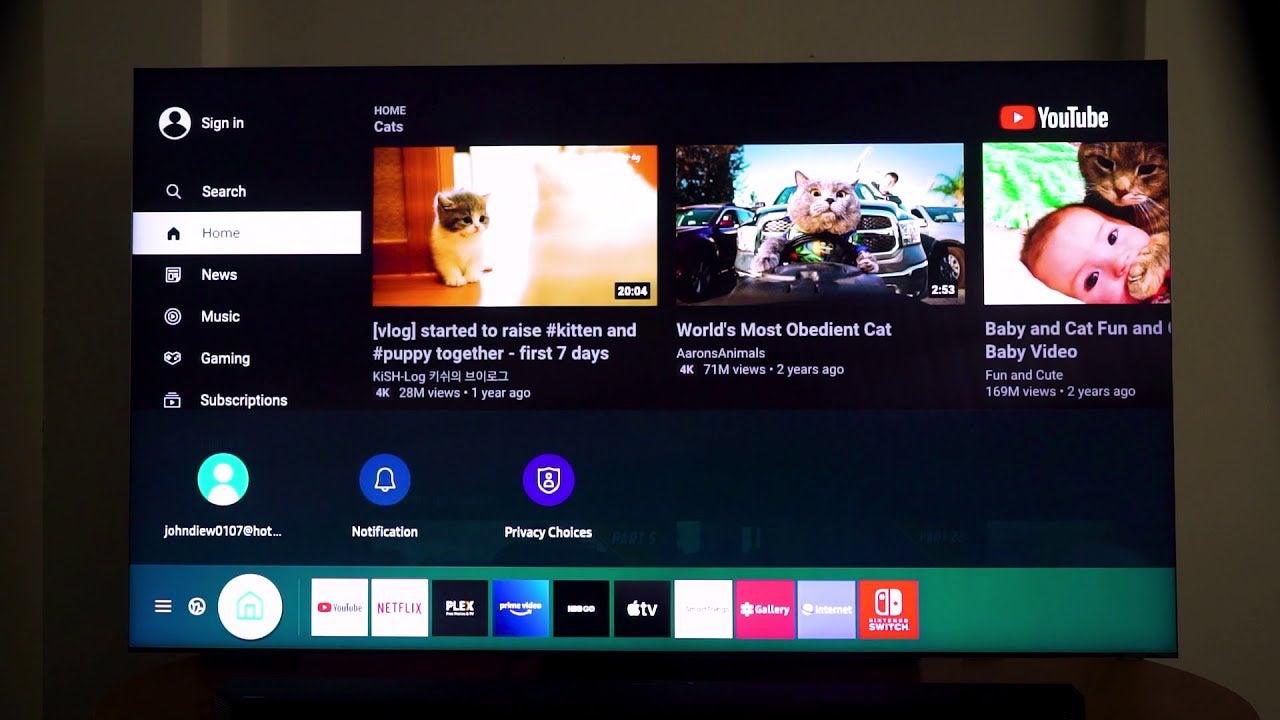
Are subscription video-on-demand (SVOD) operators sleeping on YouTube? The social video platform is one of the largest content providers in the world, with billions of users across the globe. One oft-quoted stat says that 2.49 billion people used YouTube in 2024, and it may be time for SVOD operators to start treating the platform like a serious threat to their businesses, particularly in a time when the on-demand streaming marketplace is being forced to evolve in order to show it can be profitable.
Key Details:
- Record high: In April, YouTube accounted for a record 12.4% of all TV watched in the United States.
- Breaking content barriers: In the first quarter, 38% of YouTube viewers watched traditional TV shows, documentaries, or movies on the service.
- Reason for concern: Increasing interest in traditional video types among YouTube users could cause some streamers to topple.
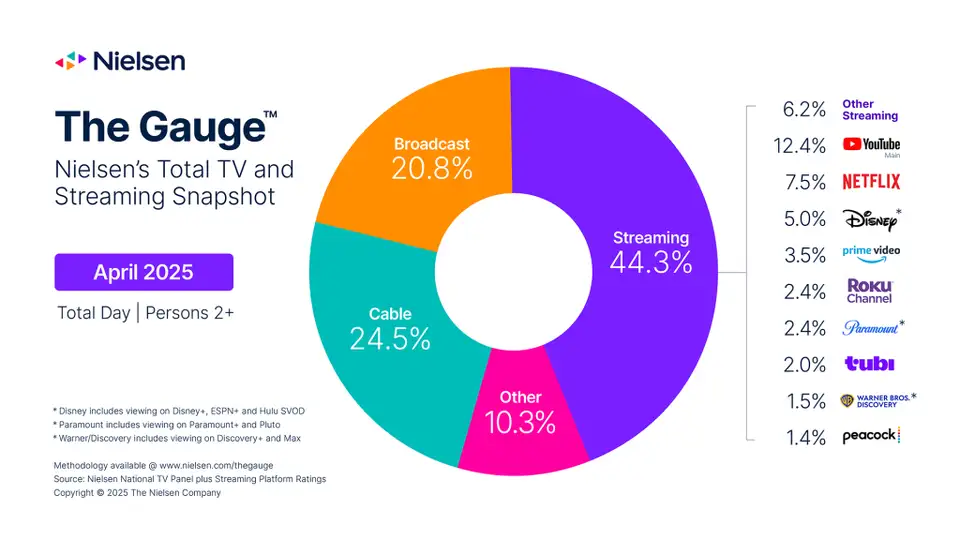
There is an increasing amount of data to support the assertion that YouTube is both the present and the future of TV. Let’s start with Nielsen, the ratings magnate who has made an art out of analyzing what people are watching, and on which platforms. In April 2025, Nielsen measured that YouTube was responsible for 12.4% of all TV watched in the United States. The next-closest streaming platform was Netflix, with 7.5% of the total. Put another way, people spent more time watching YouTube in April than they did Disney+, Prime Video, Paramount+, and Peacock combined.
Click the chart to enlarge.
The 12.4% of TV-watching time represents a platform high for YouTube, and April was the third month in a row in which the service hit a platform best, according to Nielsen’s numbers. Since April 2024, YouTube has added 2.8 percentage points to its overall share of TV viewing time.
To be sure, not all of the content on YouTube overlaps with what audiences can find on SVOD services. The platform is still used to watch short-form social videos more often than not, but there is data that points to a concerning trend among YouTube audiences that SVOD owners will need to pay attention to going forward.
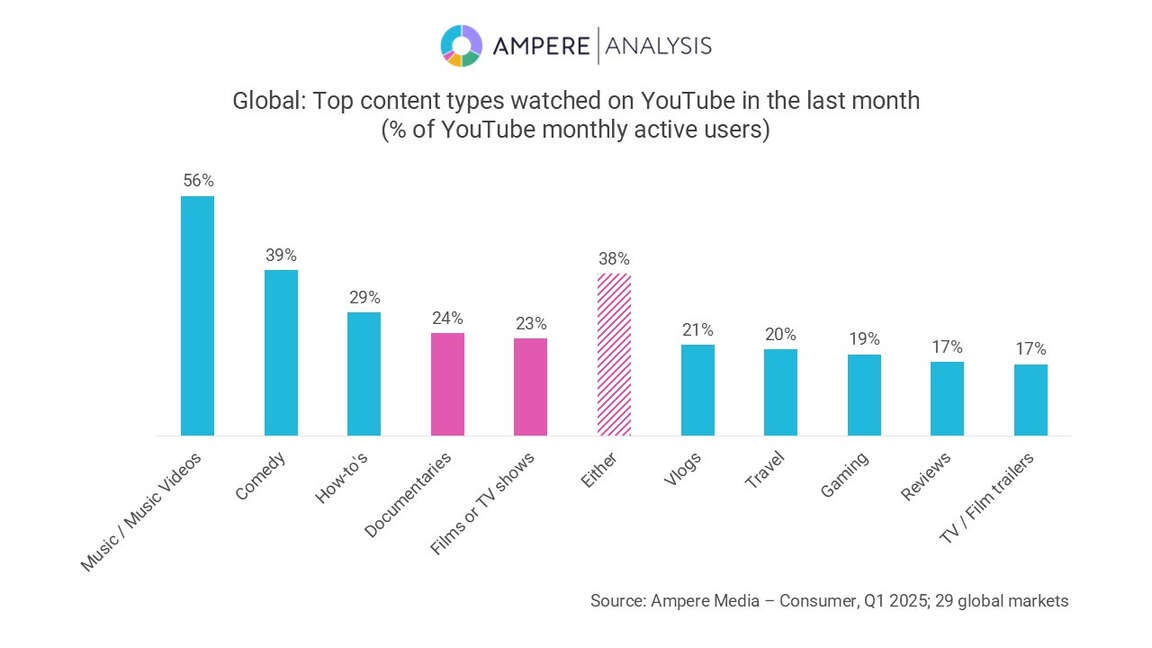
That data comes from Ampere Analysis, which measured the types of content that viewers were accessing on YouTube in the first months of 2025. In its recently-published findings, Ampere found that users are watching more and more traditional TV content on the service.
Thirty-eight percent of YouTube monthly active users watched documentaries, TV shows, or movies on YouTube early in 2025. Documentaries were the fourth-most-watched type of content on the platform, while TV shows and movies were fifth, according to Ampere’s data. That outstrips travel videos, vlogs, gaming content, reviews, and TV or movie trailers.
Click chart to enlarge.
The data from Ampere shows that North American audiences are right in line with the global average, with 37% of viewers in this region watching docs, TV, or movies on YouTube. Thirty-four percent of users who say that they watched these content types also say they used their smart TV to watch them, demonstrating that YouTube is being thought of more as a TV app than it used to be.
The argument is not whether YouTube is the future of TV. The service has the most extensive active user base of any service, with 84% of global internet users watching monthly, 73% weekly, and 59% daily. No subscription on-demand streaming service even approaches those numbers.
The saving grace for the largest streaming services is that there is still a clear differentiation between user-generated content and studio-made titles. YouTube pledged earlier this year that it would not go back to making its own TV shows and movies, and why would it? The platform generates a huge amount of revenue from ads, and doesn’t need to go through the headache of setting aside money to create content and find creatives to bring it to life.
But the fact that more and more viewers around the globe are watching TV shows, movies, and other content traditionally found on SVOD services must be of some concern to smaller operators in the streaming space. Time and again, executives in the streaming space have given their opinion that there is really only room for a few giants in the streaming world, and consolidation has already begun. The latest example is Roku acquisition of the live TV streamer Frndly TV, and there will almost certainly be other such transactions in the coming years.
YouTube itself may be a driver of that consolidation. Could its parent company, Google, begin searching for assets like AMC or STARZ, whose content could stream exclusively on its platform at some point in the future? That might not be in the cards immediately, but it shouldn’t be counted out as these companies look toward a future in which their linear TV channels don’t bring in enough revenue to keep the lights on.
I don’t think that YouTube will crowd every SVOD service out of the marketplace. Netflix, Disney+, Apple TV+, and one or two other giants in the space will continue in the decades to come, but some of the smaller players could find themselves crowded out by YouTube going forward. The adoption of long-form content by YouTube customers is a troubling sign for these lesser streamers and could point to a future where they’re no longer relevant at all.