Bluetooth vs infrared remotes: what you need to know
Bluetooth vs infrared remotes: what you need to know
We’ll explain the difference between these two types of remote, explain the advantages and disadvantages of each, and more.

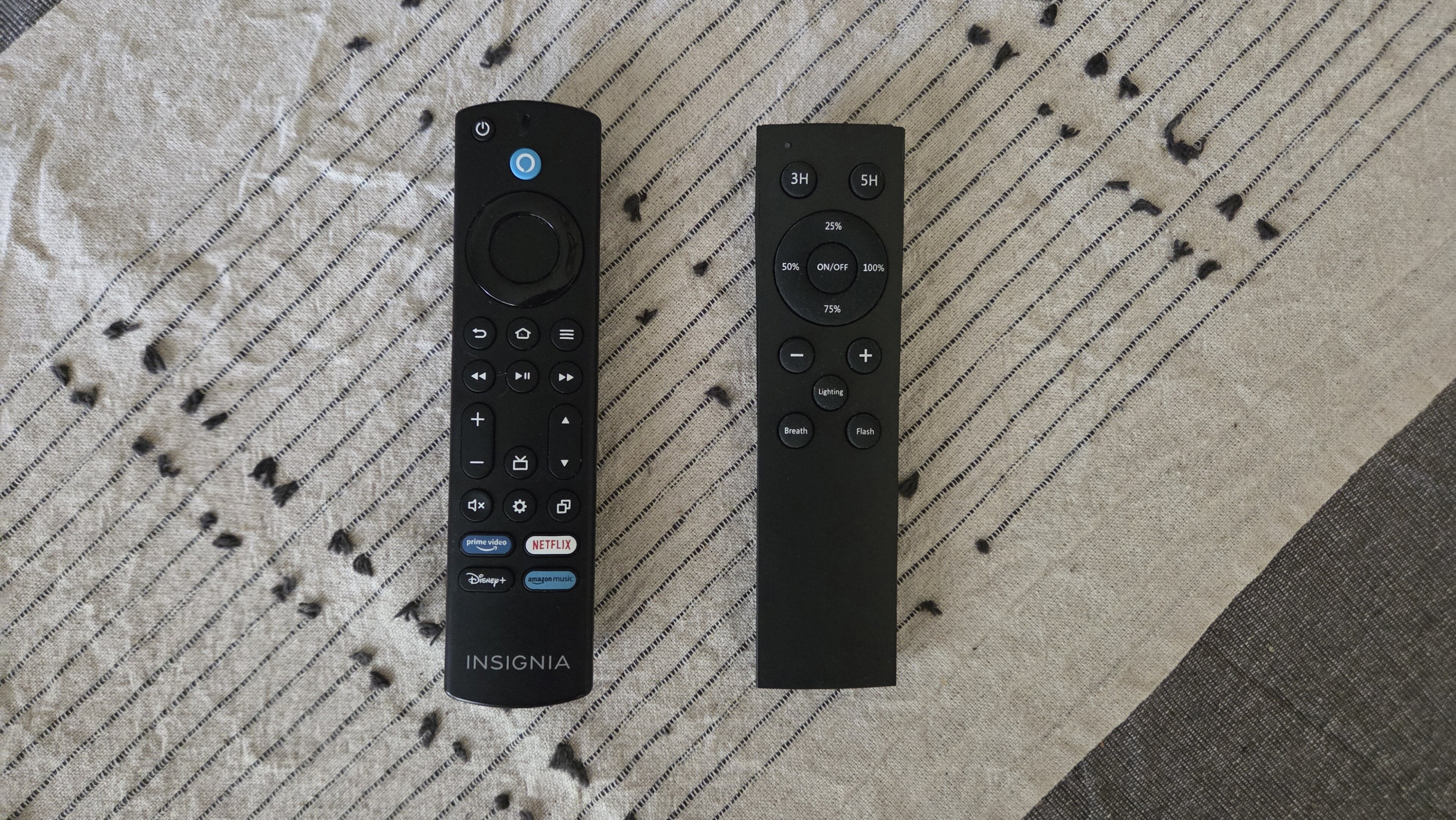
Chances are, most readers have never really thought about whether their remote connects to their TV via Bluetooth or infrared (IR). My personal philosophy with remotes has always been “if the TV does what I tell it to do when I push the buttons, the remote is working fine.”
But there can be a big difference in performance between Bluetooth and IR remotes, and knowing which you have can be critical for troubleshooting or for exercising the maximum level of control over your devices. So, what’s the difference between Bluetooth and IR remotes, and which does your device have? Is one better than the other? We’ll explain everything you need to know below.
Everything you need to know about Bluetooth vs Infrared remotes
What is an infrared remote?
An infrared remote uses a light-emitting diode (LED) to send pulses of invisible infrared light to a receiver on the TV or device. These light pulses are essentially transmissions of binary code that are translated to specific commands, such as increasing the volume or changing the channel.
IR technology has been the main driver of wireless TV remotes since the late 1970s; before their introduction, viewers were mostly forced to either use wired remotes or to walk up to the TV and change the channel with controls on the set’s housing.
What is a Bluetooth remote?
Bluetooth uses short-wavelength UHF radio waves to transmit data to a receiver on the TV. It’s significantly more advanced than IR from a technical standpoint, requiring a microchip transceiver and antenna in both the remote and the receiving device. Bluetooth devices also require a dynamic pairing process between the remote and the device.
Bluetooth controllers first crept into the marketplace in the early 2000s, mostly as a feature of video game consoles. Streaming players began to standardize the use of the technology for their remote controls in the mid 2010s, and a few years later, premium smart TVs began to make the switch to primarily using Bluetooth remotes, as well.
Which devices come with Bluetooth remotes?
There are no hard and fast rules when it comes to industry use of remote types; which type of remote is included with a given device is solely at the discretion of the manufacturer. Nevertheless, we can offer a general list of devices that use Bluetooth remotes, including:
- Top smart TVs
- Premium streaming players such as Google TV, Fire TV, and Apple TV
- Video game consoles
- Virtual and augmented reality headsets
- Smart projectors
- Smart lighting
Which devices come with infrared remotes?
As mentioned above, there is no set list of devices that come with one remote type over another. But generally speaking, shoppers can expect the following devices to include IR remotes:
- Budget and mid-priced TVs
- Soundbars and audio receivers
- HVAC devices like portable air conditioners
- Novelty lighting strips
- Older projectors
- DVD/Blu-ray players
- Cable boxes
Do infrared and Bluetooth remotes have voice assistants?
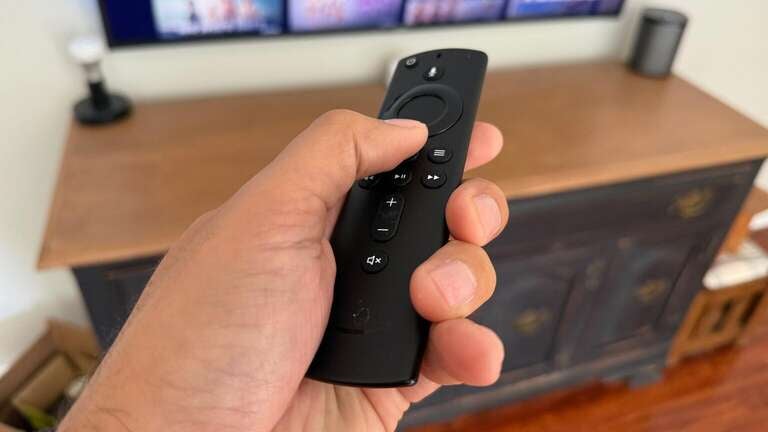
Infrared remotes do not generallyf include voice assistant technology. The reason is that infrared remotes can only transfer simple, one-way commands. Voice assistants also require a microphone in the remote to capture audio, and a two-way connection capable of transmitting that audio.
While Bluetooth receivers and transmitters have the hardware and bandwidth to handle that kind of data, IR remotes do not. Voice assistant technology simply requires technology that’s too advanced for IR remotes, though it is commonly found on Bluetooth devices.
Is infrared or Bluetooth better?
There are advantages and drawbacks to both Bluetooth and infrared remotes. Bluetooth remotes have a much longer range, allowing viewers to command their device from as far as 100 feet away, depending on the obstacles between them and the receiver. The dedicated Bluetooth connection also means users do not need a direct line of sight to control their device with the remote; signals can pass through doors, walls, and other barriers much better than IR remotes. And as mentioned above, Bluetooth remotes are often able to use voice assistants.
Many Bluetooth streaming remotes can also control TVs and connected devices, as well. Smart TVs and streaming players that can use HDMI-CEC commands will be able to use a Bluetooth remote to raise and lower the volume of the TV, power it on and off, and execute other functions.
On the other hand, IR remotes use far less power and don’t suffer from as many interference issues as Bluetooth remotes sometimes can, especially in devices crowded with other 2.4 GHz devices. Interference issues are more common with Bluetooth remotes, which can lead to delays in the transmission of a command between the remote and a receiver.
If you’re looking for a more tech-forward experience that allows you to control your TV or device from more places, you’ll find Bluetooth remotes to be the superior type. If, on the other hand, you prefer a “dumb” remote experience, with simple commands executed at the push of a button, IR remotes are the best choice for you.
Do infrared remotes work on modern smart TVs?
Yes! Even though most high-end smart TVs are built to work with a Bluetooth remote, nearly all TV sets sold today still come with an infrared receiver built in. IR receivers are incredibly cheap for TV manufacturers to incorporate, and that means users can still operate them using an IR remote if needed.
IR is the perfect failsafe if your Bluetooth remote breaks, runs out of battery, or suffers a massive software failure. It may not offer an ideal browsing experience, but if your smart TV’s fancy Bluetooth remote dies on you, an IR backup should work.
Comparing Bluetooth and IR remotes
| Feature | Bluetooth remotes | IR remotes |
|---|---|---|
| Direct line of sight | Not required | Strictly required |
| Operational range | 30 to 100 feet (maximum) | Typically less than 30 feet |
| Data bandwidth | High | Very low |
| Power consumption | Moderate to high | Very low |
| Interference issues | Moderate | Low |
| Cost to make | Moderate to high | Negligible |
| Can communicate with HDMI-CEC? | Yes | N/A |
Do Bluetooth remotes support IR?
Yes, most modern streaming remotes, including those for Apple TV, Google TV, Roku, and Amazon Fire TV devices, are hybrid Bluetooth/IR devices. They use Bluetooth to speak to the streaming player they pair with, but the IR blaster built into the remote allows viewers to control the volume or power of older TVs.
How to know which remote you have
If you’re not sure which type of remote came with your smart TV or streaming device, you should look over the device’s packaging or instruction manual for any mentions of Bluetooth or the Bluetooth logo. Barring that, there are some signs to look out for that can easily confirm which kind of remote you have.
If your remote works when pointed away from the TV, requires a pairing process during setup, or has a voice assistant, it’s almost certainly Bluetooth. If it only works while pointed at the TV, however, you likely have an IR remote instead.
Roku streaming players
From $40
Roku streaming players make it easy to access your favorite streaming apps in one simple interface. With options for HD and 4K viewing, there’s a Roku device for every budget and setup.