Are the days numbered for my beloved Roku as we know it?
Are the days numbered for my beloved Roku as we know it?
The once neutral platform now might have a very different direction.

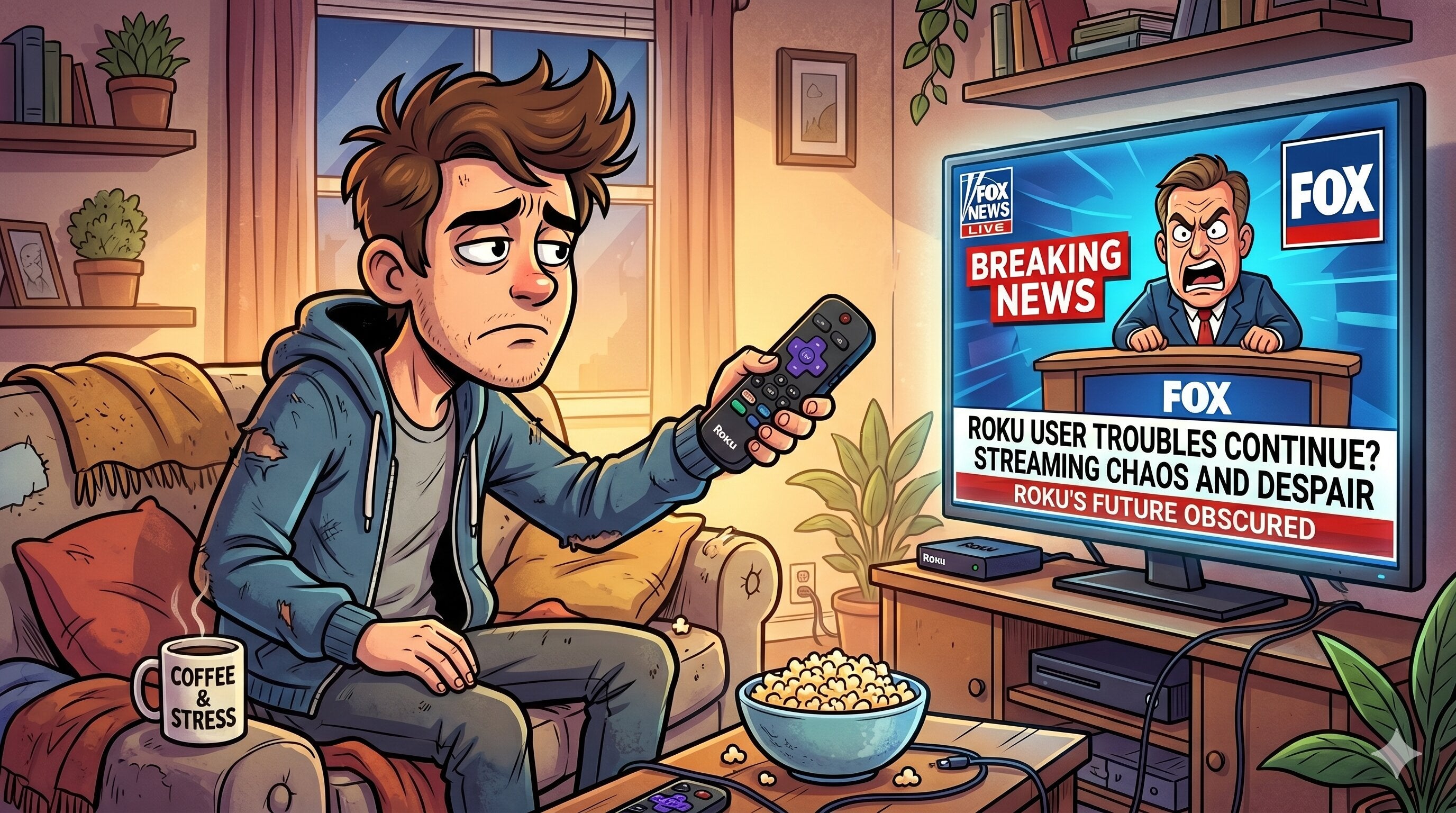
The beauty of cutting the cord has always been choice: choice of hardware, choice of streamers, choice of almost everything. Unlike the traditional cable days when one company controlled both the box sitting by the TV and the channels you watched on it, streaming was the bright light that gave consumers options. Cord-cutting quickly became cool. If you didn’t like your device or streamer, you could simply switch to a different one. If a platform became too complicated, too expensive, or too focused on serving its own interests, there was always another one waiting in the wings.
Over the years, I’ve bounced between nearly all of them, chasing something simple until I finally landed on Roku, a platform that was mostly non-corporate and not bloated with ads or apps that were of no interest to me whatsoever.
Today, however, it was announced that Fox is set to acquire Roku, and now I’m left wondering if my very non-corporate streaming platform of choice is about to become anything but.
From humble beginnings
When I first cut the cord, I grabbed a few Fire TV Sticks and was immediately hooked. It felt like freedom — all the apps I wanted, my live TV streaming service of choice at the time (R.I.P. PlayStation Vue), and a clean break from cable TV; not to mention no more cable boxes and required ancillary hardware.
But over time, Fire TV slowly stopped feeling as neutral as it once was. The interface filled up with bloat, ads and recommendations took over the home screen, and Amazon’s influence over the ecosystem became impossible to ignore. It worked, yes, but it no longer felt like what I was looking for, so I moved on.
As an Android user, the oddly named Google Chromecast with Google TV felt like the answer at the time. Sleek interface, inexpensive, speedy hardware, strong recommendations, and a more refined experience overall. Again, it felt like everything I wanted in a streaming platform, until it didn’t.
The same pattern crept; more promos, more Google-driven content, more friction between me and the apps I actually wanted. And once I moved from Android to iPhone, I was no longer tied into Google’s ecosystem in the same way, so I craved something more neutral. I was leaning toward Apple TV, but part of me didn’t want to go all-in again with one ecosystem, and that’s when giving Roku a try finally made sense.
Team Purple
Roku felt like a reset button for my streaming. No heavy ecosystem pushing. No corporate sheisters pushing content in my face. No storefront disguised as a home screen. Just a grid of apps and a remote that did its job. It wasn’t anything fancy, but that was the point — it stayed out of the way and just worked when I needed it to.
For more than a few years now, Roku has served my household well. While everyone else raced to build super-platforms that became even more jam-packed with garbage, Roku stayed focused on being the simplest path to your streaming services. But after today, that simplicity may be shifting.
What does Fox say?
Fox is acquiring Roku in a roughly $22 billion deal that will fold one of the country’s biggest streaming platforms into a legacy media company built on sports, news, and ad-supported television. It’s a move that effectively merges distribution and content under the same roof — combining Fox’s programming and supplementary businesses with Roku’s reach across more than 100 million streaming households.
Together, Fox and Roku would span both sides of the ecosystem: Fox bringing programming, live events, and an established ad sales machine; Roku controlling the operating system sitting in millions of streaming households. That combination is what makes the deal so significant — not just for what’s on TV, but for what shows up first when you turn it on.
On paper, both companies are promising continuity. Roku stays open, third-party apps still matter, and the platform doesn’t suddenly become Fox-exclusive. Tubi is supposedly staying separate from The Roku Channel as well, and obviously, nothing will change overnight.
Today, I can turn on my TV and have everything I need, with nothing I don’t. My streaming apps are all ready for me, even with the small ad on the size that I’ve learned to ignore. I don’t have to scroll down through promoted content, ads, or Prime Day deals just to watch the final season of “The Bear.”
And honestly, that neutrality is what users notice most day to day. You turn on the TV, and you’re basically in your own setup — your apps, your row of services, your watch history. Yes, there are promoted tiles and ad placements baked into the interface, but it still feels like your system. You’re not being forced through a maze of storefronts just to get back to a show you were watching.
But in the coming months, will that all change? Will Tubi work its way into the Roku menu? Will Fox apps be the defaults on all new devices? Will my how-to-watch offerings give preferential treatment to those apps as well? One of the things I love about Roku is that it’s mine. Nothing is forced upon me; the apps I see are the ones I picked, and there aren’t overly obtrusive ads to navigate around. I love not being tied to any corporation that constantly shoves products, ads, or apps down my throat.
That’s what makes this interesting — and a little uneasy. I’m hoping that Roku doesn’t need to become “Fox-only” for the experience to feel meaningfully different. Small ranking changes, UI nudges, and promotional bias can quietly reshape how people discover what to watch. I don’t need Fox content pushed in my face. I don’t want Fox apps preinstalled and not removable. I don’t necessarily want Tubi mixed with The Roku Channel.
Time will tell
Today, Roku’s appeal lies in its largely staying out of the way. You can jump into Netflix, Disney+, Apple TV, or YouTube TV without feeling like the platform itself is steering you. The fear isn’t that this disappears overnight — it’s that over time, it becomes less true without a clear moment when it changed. Fox will slowly make changes, many of them irreversible, and Roku will lose the allure that has kept it in households for all these years.
Maybe nothing dramatic happens. Or maybe, a year or two from now, the home screen feels just different enough that you notice it only after the fact. But with new ownership comes new incentives, and my biggest worry is that I’ll soon have to abandon Roku once it, too, becomes overrun by the corporation behind it, at which point maybe I will have to make the expensive move to Apple TV.

Roku Channel
The Roku Channel is a free, ad-supported streaming service that offers a broad mix of movies, TV shows, live linear channels, and original programming. Available to all viewers — not just Roku device owners — the service features licensed content from major studios alongside Roku Originals, which include exclusive series, movies, and specials previously produced for Quibi, as well as new original projects developed specifically for the platform.