Are streamers still making content too hard to find?
Are streamers still making content too hard to find?
Over a quarter of viewers still report not being able to find the content they want, according to a new report from Gracenote.

Streaming certainly offers viewers a ton of choice, but that can turn into a double-edged sword quickly. Sifting through all the content you want before you actually find the thing you want to watch has become a Sisyphean task, and new data from Gracenote reflects that. Nielsen’s content intelligence business has released its fifth annual State of Play report, demonstrating that audiences are still frustrated with fragmentation and hoping for a solution.
Key Details:
- Still looking: Forty percent of streaming viewers can’t find what they’re looking for, and 27% miss shows because of it.
- Consequences More than half of respondents say they would cancel a service if they can’t find relevant programming.
- Look to the UX: Over 70% of viewers want a single program guide that consolidates everything from their subscriptions.
According to Gracenote’s report, streaming overload is having a clear impact on streaming enjoyment. The average viewer spends 12 minutes trying to find something to watch, and 47% of viewers say finding a new stream takes longer than a year ago. Forty percent of streaming viewers can’t find what they’re looking for, and it jumps to 52% of sports fans who say they don’t know what channel or streamer a specific game is on.
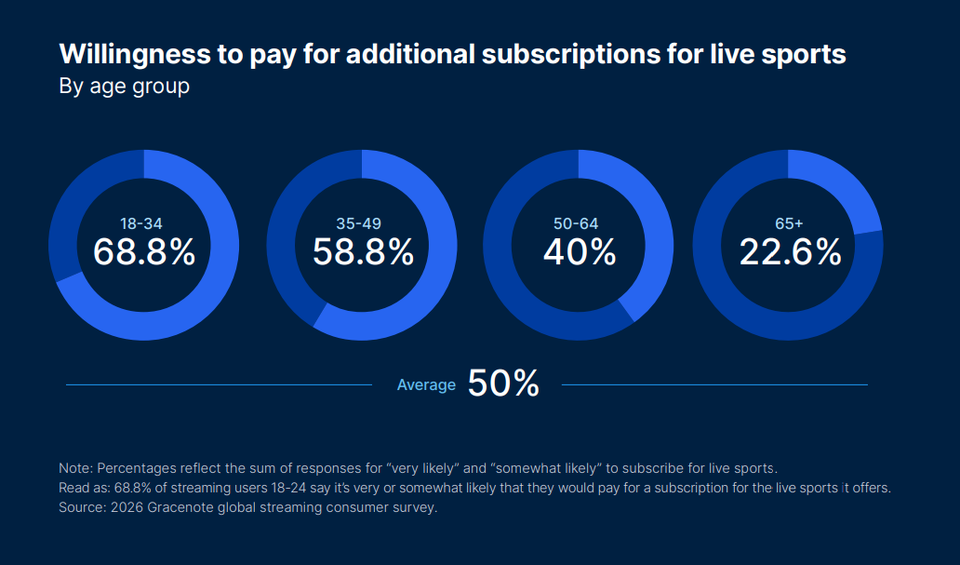
Sports is a powerful draw for viewers. On average, 50% of respondents are willing to pay for additional subscriptions to watch live sports, and the number jumps to nearly 70% among viewers 18 to 34. But if streamers can’t lead viewers to these sports games effectively, that enthusiasm is all for naught.
Click chart to expand.
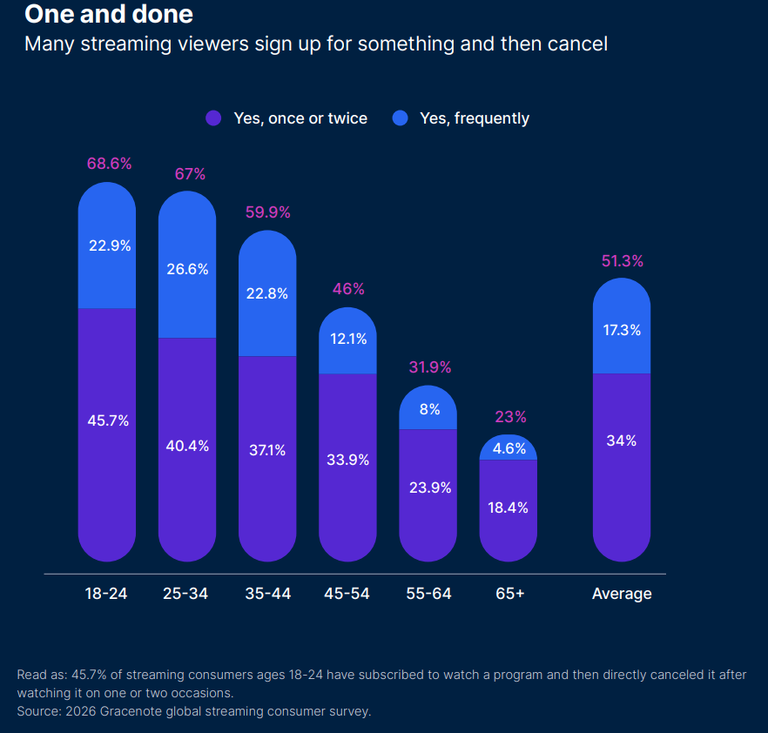
Twenty-seven percent of respondents to Gracenote say that they’ve missed shows because they couldn’t locate them in time. Worse yet for streaming services, 51.6% say they would cancel a given service because they can’t find something interesting to watch, up from 48.5% in 2025. On average, 51.3% of viewers sign up to watch a single title, then cancel because they can’t find anything else of interest on that platform.
Click chart to expand.
So, what’s the solution for streamers? It’s all in the user experience. Nearly 90% of respondents said that user experience was very or somewhat important when deciding which streaming service to keep in 2026. That explains in part why Netflix has done so much work to overhaul its interface on various platforms in recent years.
But how can user interfaces help solve the content discovery problem? By offering more content discovery from other streaming services, according to Gracenote. It found that 72% of viewers want a single program guide that consolidates everything available across their various streaming services.
How likely is that to happen? Streamers themselves are unlikely to start showing content from the competition on their own apps, but smart TV user interfaces can be a neutral place for content aggregation. That requires the programmer to play nice, however; Fire TV home screens, for example, can help pull streaming recommendations from across various apps, but some streamers choose not to let their titles be discoverable this way.
“Viewers want one place to look, even when there are many places to watch,” Gracenote executive Ryan Moore said. “That starts with recognizing the same program across services and having accurate information about where to watch it. Gracenote provides that content intelligence, helping platforms guide viewers to the programming they want — even when it’s on another service.”

Netflix
Netflix is a leading subscription-based video streaming service that offers on-demand access to an extensive library of over 3,000 movies, 2,000+ TV shows, and a growing collection of acclaimed Netflix originals. Renowned for producing groundbreaking content, Netflix has become a cultural powerhouse with hit originals like “Stranger Things,” “Wednesday,” “Squid Game,” “The Crown,” “Tiger King,” “Bridgerton,” “The Witcher,” and “Black Mirror.”