Howdy hits 1 million subscribers; is its success a roadmap?
Howdy hits 1 million subscribers; is its success a roadmap?
The streamer is offering content that’s traditionally ad supported for a very low price. Could other streamers borrow its methods?

It’s been less than a year since Roku first launched Howdy. The streamer hit the market in August, and gives viewers the chance to stream old favorites without ads for $3 per month. Its catalog is filled exclusively with library content, but it also offers customers the chance to go ad-free for a low price.
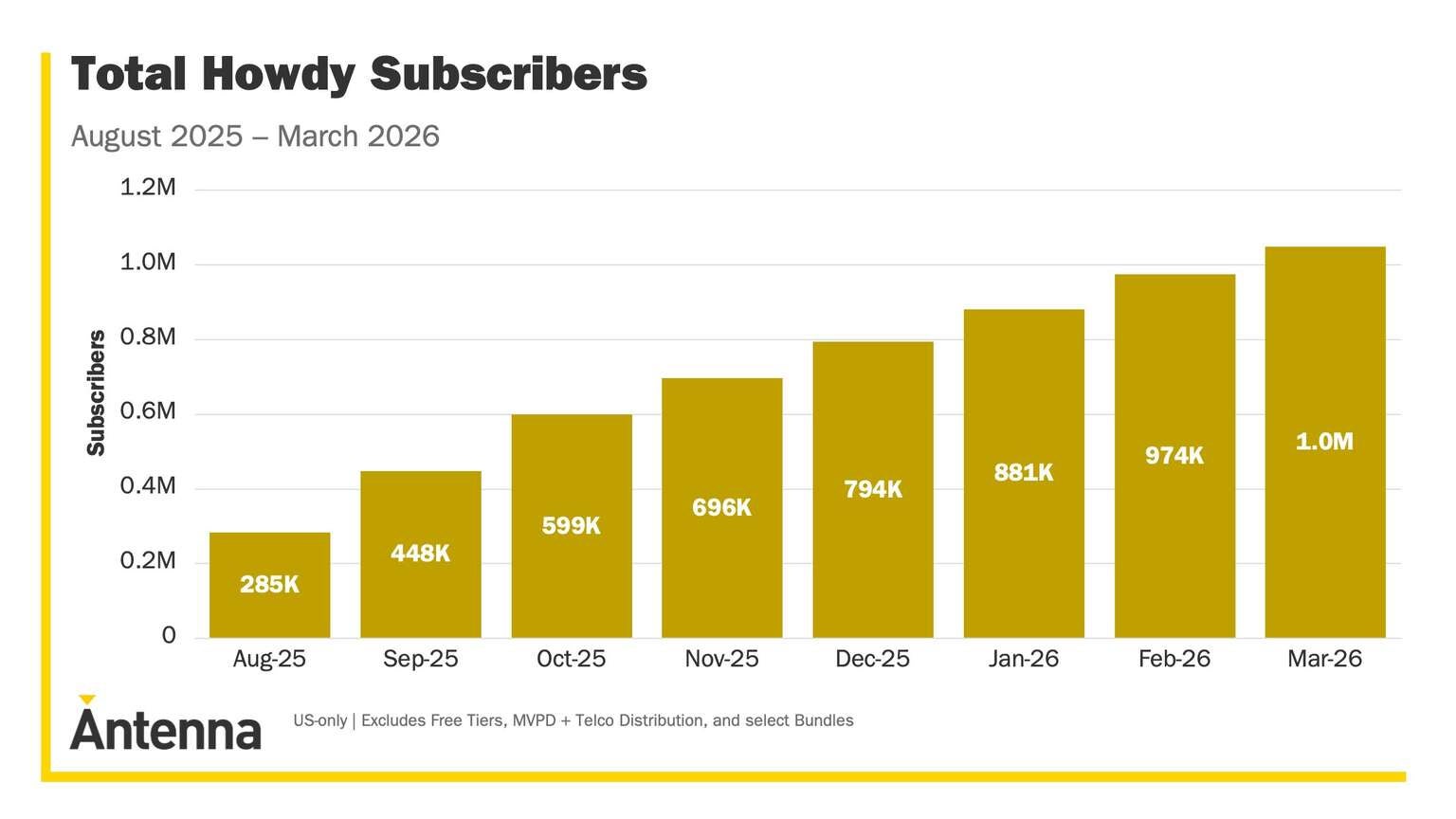
New data from Antenna indicates that, in its short time on the market, Howdy has attracted more than 1 million subscribers. Better yet for the service, its retention rate exceeds that of premium streamers like Netflix and HBO Max. It’s a rousing success for Roku, and it could show the way forward for other streaming services as well.
The total number of Howdy subscribers has grown steadily month by month since launch, per Antenna’s estimates. It attracted nearly 500,000 customers by the end of September, and while growth has slowed a bit in recent months, it has remained steady overall.
Antenna’s data shows that Howdy has accounted for 23% of all SVOD signups through The Roku Channel since it launched — an impressive share, considering the platform also distributes most of the top streaming services in the United States. Roku is now present in 100 million global households, giving it an impressive distribution network to market a new streamer like Howdy.
So, what is it that makes Howdy so popular? To be sure, price combined with the lack of commercials is an important factor. None of the so-called “Big Five” streamers (Disney+, HBO Max, Hulu, Netflix, and Prime Video) offers an ad-free plan anywhere close to $3 per month, so Howdy is serving an audience that otherwise doesn’t really have another option to turn to.
Another facet of Howdy’s popularity is its library of content. Howdy doesn’t offer new titles, original shows, or movies; instead, it licenses its content from studios like Warner Bros. Discovery. Its catalog includes original series from The Roku Channel that have had their ads removed, but otherwise, it’s stocked with older movies like “Escape from New York” and “Saw,” and TV shows like “Vampire Academy.”
It may run counter to conventional wisdom to think that older, well-known titles are attracting people to Howdy rather than new, premium streaming originals. But recent data from Tubi showed that a whopping 97% of viewers are interested in watching content released more than 10 years ago. What’s more, 63% of survey respondents say such titles have superior style and storytelling, and 79% want their streaming services to remind them of older content rather than promote only new series.
That’s a huge reason for Howdy’s success. The streamer is meeting a clear demand for nostalgic streaming content, and is combining its older catalog with a throwback price for ad-free streaming. Customers have been seeking a service that provides the exact type of library Howdy offers, and are more than willing to pay a mere $3 per month for it.
So, could Howdy’s success serve as a model for other streaming services? There seems to be a plain opportunity for services like Pluto TV and Tubi to imitate Howdy; like Roku’s streamer, Pluto and Tubi are well stocked with TV shows and movies that were released 10 years ago or longer.
If Pluto or Tubi launched an ad-free plan for a price close to that of Howdy’s, they may also be able to attract millions of customers to such tiers in a short time. Such a move would open a new revenue stream for the parent companies of these free streamers, but they must take care; streaming services that were previously free, launching paid tiers could create a backlash among users who are already weary of being asked for more money by existing streamers.
Perhaps it would be better for subscription streamers like Peacock or Paramount+ to launch new, budget-friendly tiers without ads. In fact, Peacock has already taken a step in that direction; last year, the streamer launched its Select plan, which includes a selection of older Peacock titles, as well as Bravo content, but cuts out originals and live sports found on Peacock’s Premium plan. It’s still ad-supported, but it costs just $8 per month.
Peacock could easily launch a plan stocked with a smaller selection of shows and cut out ads for a price similar to that offered by Howdy. This could be a wise move for other paid streaming services to adopt as well, since customers are well and truly exhausted by a never-ending succession of price increases. The launch of less-expensive ad-free plans could even help streamers win back some goodwill that they desperately need.
Roku has hit on something with Howdy, and other streaming services should pay attention. The Howdy model could work well for free services like Pluto and Tubi, or for existing subscription streamers like Peacock and Paramount+ that could stand to show customers they know how to do more than increase their prices.

Howdy
Howdy is a free streaming channel available on Roku that brings together a mix of classic television, movies, and easygoing entertainment designed for casual, lean-back viewing. Built with simplicity in mind, the channel offers a curated lineup of nostalgic favorites, lighthearted series, and familiar titles that appeal to a broad audience.