How are Roku, Samsung dominating the market?
How are Roku, Samsung dominating the market?
New data from Parks Associates shows the two manufacturers combine to own a 51% market share in American homes.

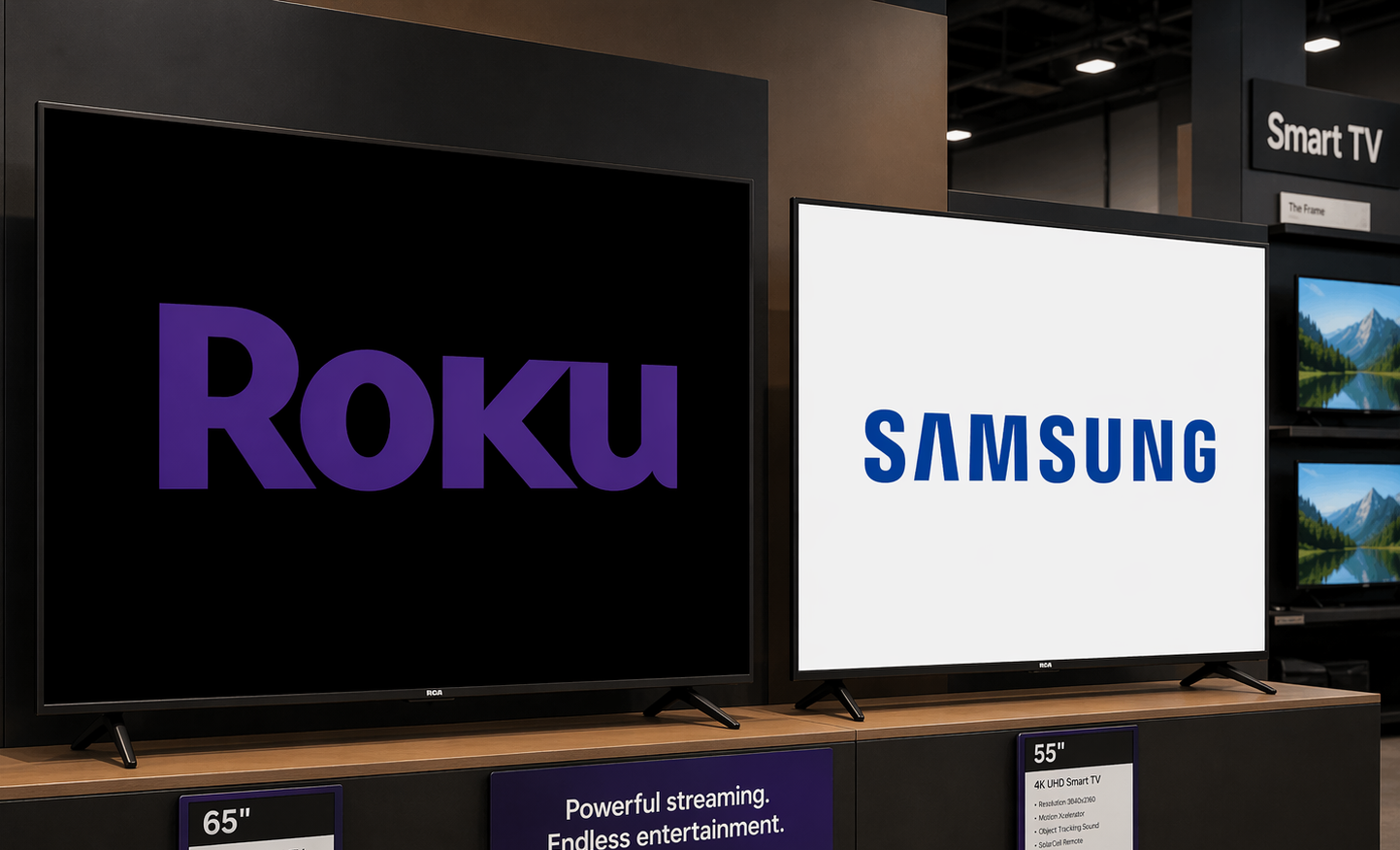
Do you use a Roku or Samsung-made device as your primary connected TV source? If so, you’re hardly alone. Roku and Samsung make some of the most popular smart TVs and connected streaming players on the market, but until now, it’s been hard to quantify just how popular they are.
New data from Parks Associates is helping to clear away some of the mystery. Its latest study shows that over 50% of consumers in the United States use Roku and Samsung connected TV devices as their primary video devices. That’s a major market share the two companies have accrued by attacking from all sides: manufacturing, TV operating systems, free streaming, and licensing. That approach, combined with an easy-to-use operating system, is what makes Roku and Samsung so commanding in the connected TV space.
Parks data shows that the Roku operating system was identified as the primary connected TV platform in the home by 28% of respondents. That was the highest of any TV OS on the market; Samsung’s Tizen OS came in second at 23%. Combined, 51% of respondents to Parks’ survey said they used either a Roku or a Samsung device most often.
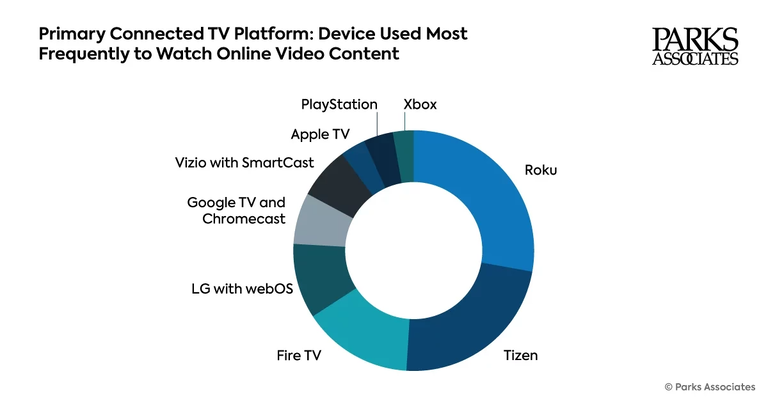
Fire TV, LG’s webOS, Google TV, Apple TV, and other operating systems are left to compete for the other 49% of market share, but it’s hard to see either surpassing Roku or Samsung. Parks shows that Roku has demonstrated modest growth in its CTV presence, while Samsung has maintained a strong position over several years.
Roku hasn’t been shy about trumpeting its success of late; in mid-April, the company announced that it had eclipsed 100 million global streaming households. And additional data shared by Parks in January showed that, when narrowing the data to just smart TVs, Samsung is the most-used smart TV OS in the United States, with 34% of respondents saying they watched a Samsung TV over any other brand.
So, how did Roku and Samsung become so dominant in the American marketplace? For one thing, the two companies are highly diversified. Samsung has been a TV manufacturer for years, but Roku joined the game much more recently, bringing its in-house TVs to market (link: https://thestreamable.com/roku-announces-first-ever-roku-made-tvs-streaming-giant-looks-to-marry-hardware-software text: for the first time in 2023. Still, both companies offer a wide range of products with their respective operating systems pre-installed, with devices at various price points to attract customers from across the economic spectrum.
Roku has an extra advantage, since it not only makes its own devices but also licenses its operating system for installation on TVs made by other companies like Hisense, Sharp, and TCL. That helps it grow its footprint even further; in 2022, Samsung realized the advantage of such practices and began licensing Tizen to additional companies as well.
Samsung and Roku have also enhanced their popularity through the use of free streaming options built into their operating systems. Both companies own streaming services that offer hundreds of free ad-supported streaming TV (FAST) channels, as well as thousands of TV episodes and movies; Samsung offers Samsung TV Plus with Tizen devices, while Roku players includes The Roku Channel.
Viewers are watching these services in large numbers. In 2025, Samsung revealed that Samsung TV Plus had 88 million monthly active users, and in Nielsen's latest The Gauge report, The Roku Channel accounted for nearly 3% of all TV viewed in February — more than Paramount+ or HBO Max. Viewers know they’ll get easy access to these streamers when they buy a Roku or Samsung device, enhancing their desirability even further.
Smart TVs and streaming devices from Samsung and Roku also remain popular thanks to their incredibly easy-to-use interfaces. Both operating systems make it simple to download and access streaming services, order apps in a way that makes sense to the individual customer, and that keeps people coming back. Roku even includes games in its operating system, in case viewers are stuck trying to think of a new TV show and movie to stream. Avoiding consumer frustration is key for every operating system, and Roku and Samsung Tizen have it nailed.
Roku and Samsung have a claim to a huge percentage of the connected TV market in the United States, and it’s not hard to see why. Both companies take a multifaceted approach to distributing their operating systems and use free streaming content and simple-to-navigate user experiences to cement themselves in the minds and hearts of consumers.
-
Roku Channel
The Roku Channel is a free, ad-supported streaming service that offers a broad mix of movies, TV shows, live linear channels, and original programming. Available to all viewers — not just Roku device owners — the service features licensed content from major studios alongside Roku Originals, which include exclusive series, movies, and specials previously produced for Quibi, as well as new original projects developed specifically for the platform.
-
Samsung TV Plus
Samsung TV Plus is a free streaming live TV and on-demand service that is available on select Samsung TV’s, mobile devices, and refrigerators. Watch 200+ live TV channels and thousands of movies and shows on demand, all for free.