How much will smart TV prices jump during the Great RAM Shortage?
How much will smart TV prices jump during the Great RAM Shortage?
We’ve already seen streaming player prices rise. How expensive are smart TVs going to get as the scramble for memory intensifies?

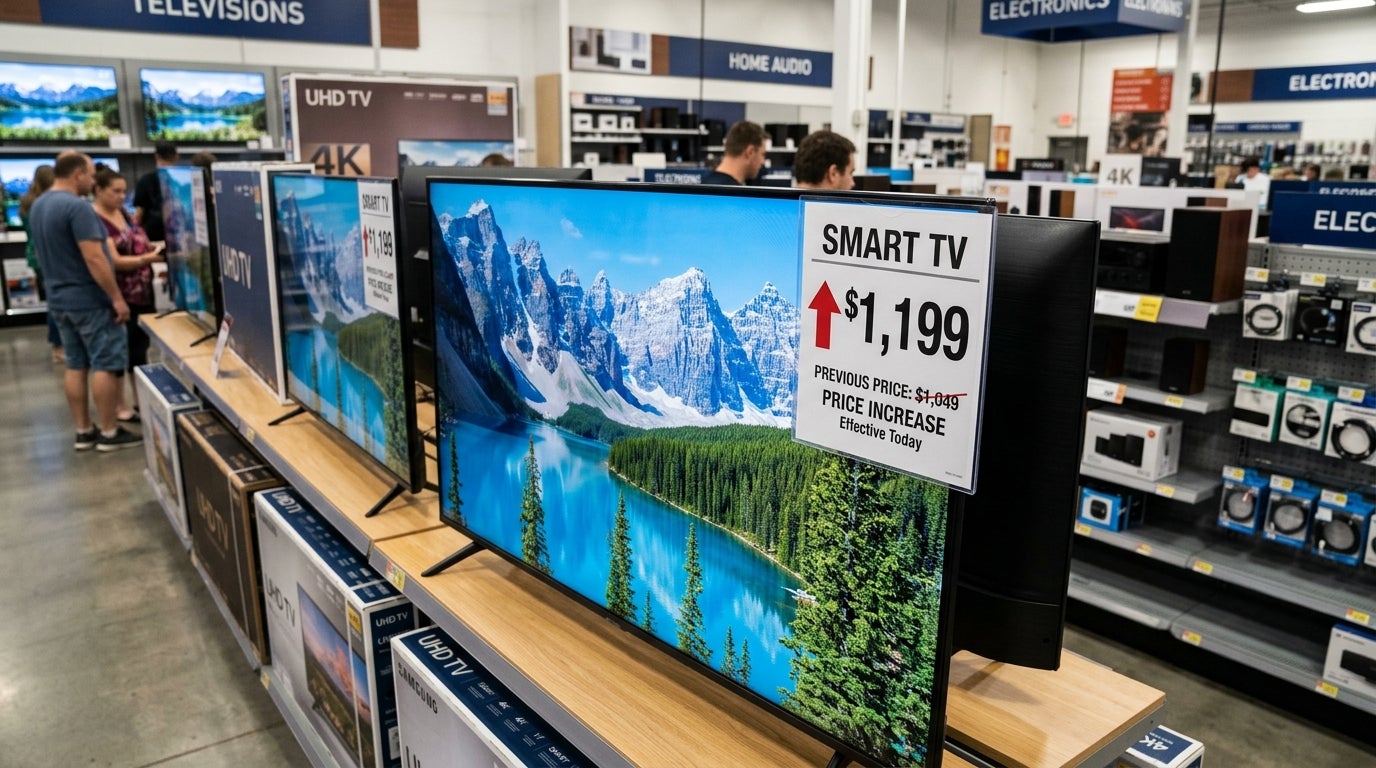
Younger consumers won’t remember, but there was a time when the big-screen TV was one of the ultimate signs of wealth. TVs larger than 30 inches were once rare, and when high-definition television was first introduced, consumers could expect to pay thousands of dollars for a large-screen set.
Times have certainly changed. Now, customers can reliably expect to get a 65-inch TV with a few premium features for $500 or less, and even higher-end sets with the best-quality 4K displays can be had for less than $2,000. This affordability is thanks in part to the valuable personal data that users sacrifice in exchange for smart TV functionalities, but also because the hardware needed to make TVs has gotten cheaper over the years. Unfortunately, one key component of the modern smart TV is now getting more expensive: random access memory (RAM), which holds active data from apps in use for instant access, is in short supply, driving up the cost of nearly every computerized device on the market. RAM shortages have already caused electronics prices to rise, and it’s only a matter of time before TVs are affected — but how hard will customers be hit?
Smart TVs
From $80 at Amazon
Over the past year, there has been far less RAM to go around. The main culprit for this shortage is the sudden rush by AI companies to build new data centers, which require mountains of memory to train and run large language models. AI data centers have become a key issue in the 2026 midterm elections in the United States, as customers weigh the benefits of AI against the intense resource consumption required by the centers and the economic threat many feel AI presents to the labor force.
To meet the demand, manufacturers like Samsung and Micron have shifted their production efforts away from standard consumer RAM. Consumer tech companies have already shown how scarcity has affected them; at the beginning of August, Roku announced it was raising prices on its entire line of streaming devices by as much as $50 each. A few weeks later, Amazon followed suit hiking Fire TV prices by as much as 60%, and this week, news came out that Google was raising its streaming device prices by 50%.
These are just a pair of examples of the rise in consumer electronics prices as a result of RAM shortages. As cited by Tom's Hardware in December, PC prices were expected to rise by up to 8% in 2026, and prices across industries could continue to rise by as much as 20% before the end of the year, and smart TVs won’t be exempt from price jumps.
To be sure, smart TVs are less RAM-intensive devices than computers or high-end streaming players. The average smart TV comes with only 1GB to 2GB of RAM, as compared to the 4GB used in the Google TV Streamer 4K. But there will be price increases in the smart TV marketplace — the only question is how much more shoppers will have to pay.
Using lower-end streaming players as an example may be instructive. Smart TVs and less premium streaming devices use around the same amount of RAM to run their operating systems and run downloaded apps: usually between 1GB and 2GB. Fire TV and Roku devices using this much RAM increased in price by 20% to 50%, and it’s quite possible that TV manufacturers will pass rate hikes of the same magnitude on to customers.
For now, TV makers are holding off on raising the price of smart TVs too high. Amazon opted not to raise the price of its new Ember smart TV line when announcing its Fire TV price hikes, and in-house-built Roku TVs have also avoided the wave of increases that have affected the company’s streaming hardware.
But it is likely only a matter of time before TV prices go up as well. It’s entirely possible that Amazon and Roku used their streaming hardware price increases as a first step to begin incrementally raising rates on all their devices, including smart TVs, without risking the customer ire that would result from raising prices on all devices at once.
Samsung’s president Wonjin Lee put it succinctly at the Consumer Electronics Show in 2026: “Prices are going up even as we speak. We don’t want to convey that burden to consumers, but we’re going to be at a point where we have to actually consider repricing our products.”
Is there anything consumers can do to avert smart TV price increases? Consumers have to settle on an opinion on AI data centers first; those in favor of more data center construction will have to think of higher prices on devices like smart TVs as a trade-off for the time being. Those against will feel even more motivated to focus their efforts on battling them through legislative efforts.
We see smart TV price increases of at least 10% to 20% due to RAM shortages as quite likely in the next six months. No manufacturer will be spared, though specific increases will vary from maker to maker, as well as model to model. There’s little TV manufacturers can do to further insulate themselves from the dearth of available memory around the globe, and consumers can count on The Streamable to keep them apprised of the latest hardware prices.
Smart TVs
From $80 at Amazon