To Binge Release or Not to Binge Release; Which Streaming Release Strategy is Most Effective?
To Binge Release or Not to Binge Release; Which Streaming Release Strategy is Most Effective?

Consumers are more spoiled for choice than ever when it comes to streaming platforms. With popular franchises like Marvel, Star Wars, Star Trek, and DC spread across different streaming services, there are more ways than ever for fans to stream their favorite content.
But just how are people enjoying that content, and how quickly? Is a weekly release strategy the best option, or should streaming companies follow the Netflix model and just drop a whole season of episodes at once? Those are some of the questions that Samba TV attempted to answer in its Q2 State of Viewership report.
According to the report, when a new show with lots of hype is released, viewers tend to pounce on it quickly. Samba TV examined several of the biggest shows released in the second quarter of 2022 and discovered that all but one had more than 70% of their cumulative 50-day viewership with 15 days after its original release. This means that nearly three-quarters of a show’s viewers watched its episodes within two weeks of the season’s premiere.
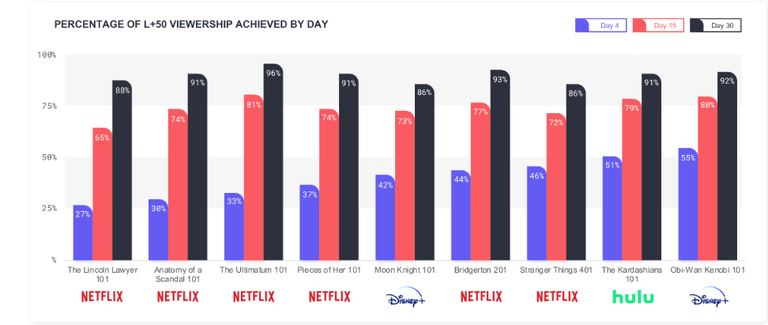
At first, that data would seem to validate the Netflix binge release model. After all, if consumers are so quick to ingest new content, why not give it to them all at once before they move on to something else? Subscription churn rates are rising as consumers look to find the best content at the best price, so isn’t it best to give viewers all of the content they can handle as fast as possible?
The answer to that question is more nuanced than it appears. Shows like “Russian Doll” and “Stranger Things” saw over 40% of their viewers binge the entirety of the show within the first five days of release. This suggests that series with established fanbases are particularly responsive to the binge format.
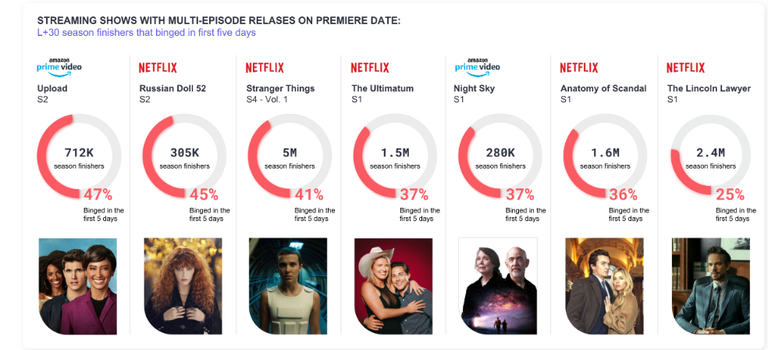
However, the data also shows that a hard-and-fast rule for how to release streaming content may not be the most advisable strategy. Netflix showed the success of a more hybrid strategy with its most recent season of “Stranger Things,” which it released in two blocks of episodes labeled “Volume 1” and “Volume 2.”
According to Samba TV, 2.9 million viewers tuned into the release of “Stranger Things” Season 4, Volume 1 on May 27; the first volume had seven episodes, and the final two episodes of the season were released as Volume 2 on July 1. Fans may not have appreciated the month-long wait, but it was an effective strategy for the streamer. An additional 300,000 viewers watched the premiere of Volume 2 within four days of its release as compared to Volume 1.
Other companies have also seen success with a mix-and-match strategy when it comes to streaming releases. Hulu uses the weekly release model for many of its most well-regarded shows, and it has paid off. According to Vulture, last year, ahead of its series premiere, true crime comedy-drama “Only Murders in the Building” was the 99th most in-demand show in America. Three weeks later, as word of mouth spread, it jumped to the 19th most in-demand show, likely spurred by its weekly rollout.
On the other hand, Hulu released all eight episodes of its culinary dark comedy “The Bear” at once this spring and the show became a surprise, breakout hit. Hulu released the show on June 23, and by July 14 had already decided it was successful enough to renew for a second season. Hulu’s corporate sibling streamer Disney+ tends to favor weekly releases for its high-visibility titles as well but will drop full seasons at once on occasion.
“With more than $40 billion being spent this year alone on new content, consumers are overwhelmed by choices,” Samba TV CEO Ashwin Navin said. “Platforms need to ensure they are driving smart strategies ahead of content launches to draw in not just built in fans but broader viewers who may be interested.”
So which strategy is better? Binge or weekly? It does seem that a mix-and-match approach that makes determinations on release format based on the individual properties might be the best option moving forward. Hulu is already invested in the strategy, and Netflix is experimenting to a lesser extent with “Stranger Things” and the final season of “Ozark.” Services will likely continue to tweak how they deliver content to audiences as viewer needs and desires continue to shift, but anything that helps streamers stand out from the competition may give them an edge.
-
Hulu
Hulu is a video streaming service that gives access to thousands of full seasons of exclusive series, hit movies, kids shows, and Hulu Originals like “Only Murders in the Building,” and “The Handmaid's Tale.”
-
Netflix
Netflix is a leading subscription-based video streaming service that offers on-demand access to an extensive library of over 3,000 movies, 2,000+ TV shows, and a growing collection of acclaimed Netflix originals. Renowned for producing groundbreaking content, Netflix has become a cultural powerhouse with hit originals like “Stranger Things,” “Wednesday,” “Squid Game,” “The Crown,” “Tiger King,” “Bridgerton,” “The Witcher,” and “Black Mirror.”

